“MOTORCYCLING IS THE LIFE”: THE LEGACY OF GUSTAF STENMARK
Written by The Harley-Davidson Museum
Photos by Josh Kurpius Archival photos courtesy of H-D Museum
Walk through the Harley-Davidson Museum and you’ll see plenty of legendary motorcycles. But the stories oftentimes don’t begin and end with a machine. They carry on in the pieces riders held onto along the way.
Scuffed, faded, and full of meaning, these mementos tell the human side of every ride.
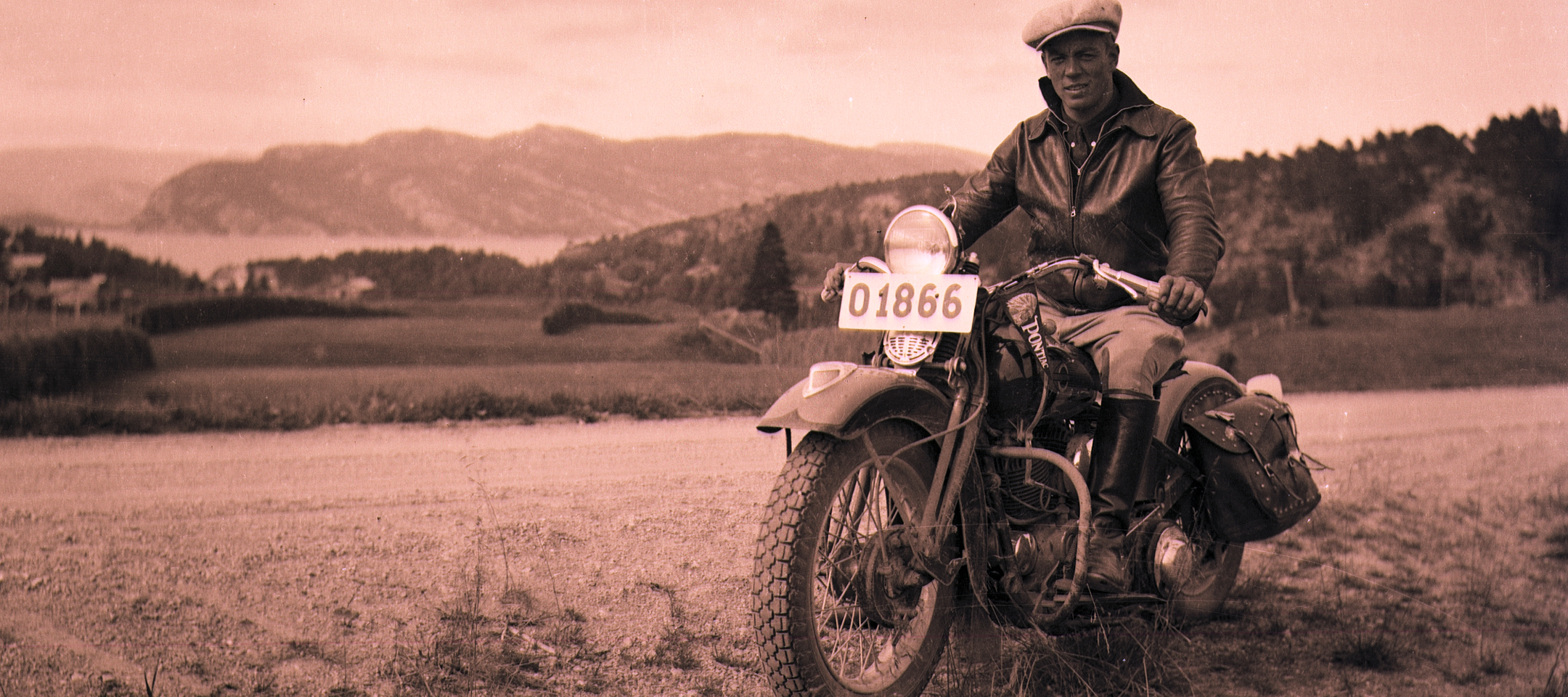
Born in Sweden in February 1909, Gustaf Stenmark came to the United States in 1930 and put down roots in Milwaukee, Wisconsin. He made a living as a carpenter, but it was what he chased outside of work that defined him: motorcycles and racing.
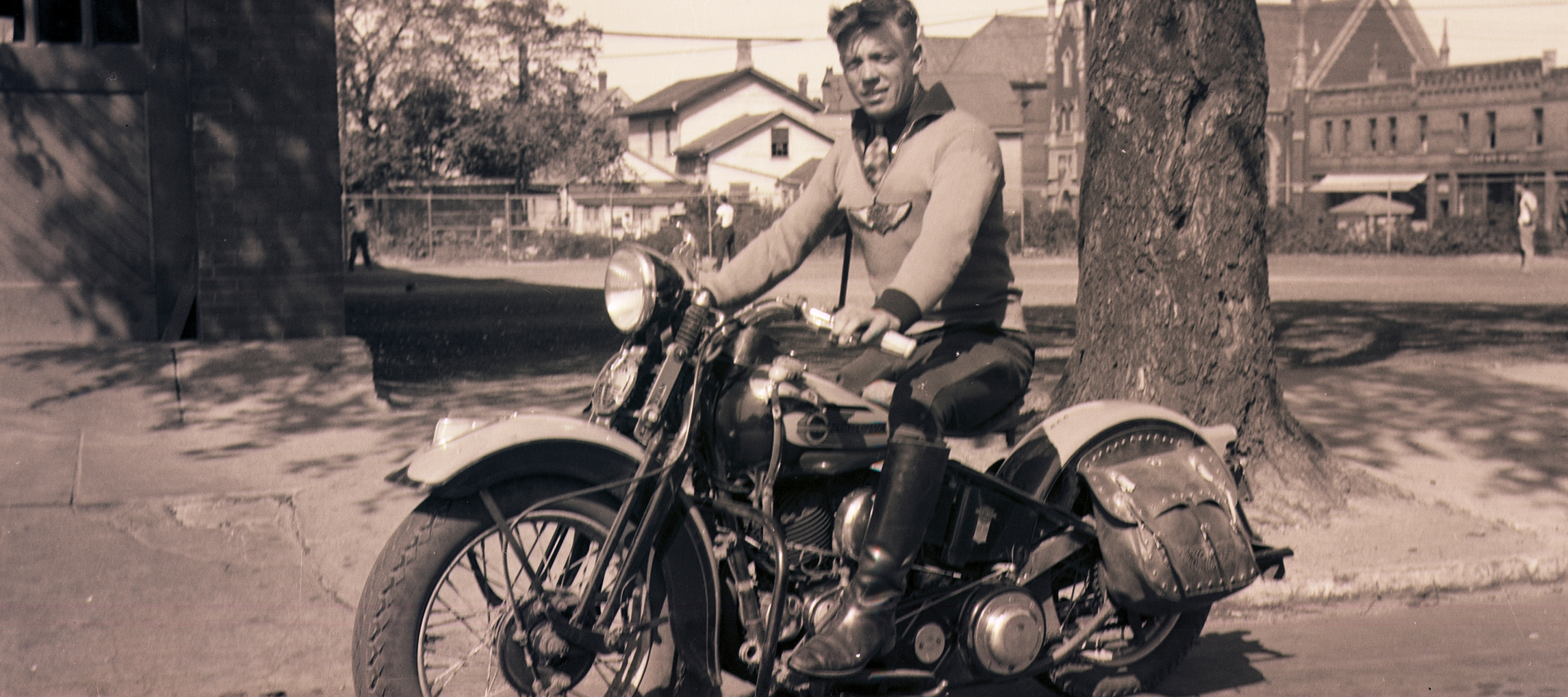
GUS WASN’T JUST A CASUAL RIDER. HE WAS A FIERCE COMPETITOR WHO PLACED IN LOCAL RUNS ACROSS THE REGION AND TOOK ON ONE OF THE TOUGHEST TESTS OUT THERE AT THE TIME: THE JACK PINE ENDURANCE RUN.
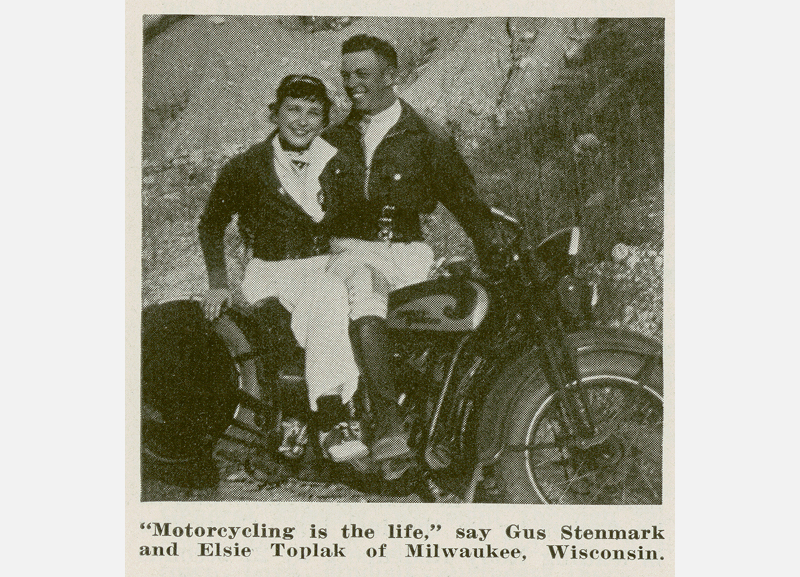
The bike that started it all for Gus was a 1929 Harley-Davidson single. By the mid-1930s, Gus was an active member of the Badger Motorcycle Club in Wisconsin, deep in the world of riding and racing. The earliest known appearance of Gus was in the March 1935 edition of The Enthusiast, where he’s pictured with his future wife, Elsi Toplak.
“Motorcycling is the life,” reads the photo caption. And he lived it that way.
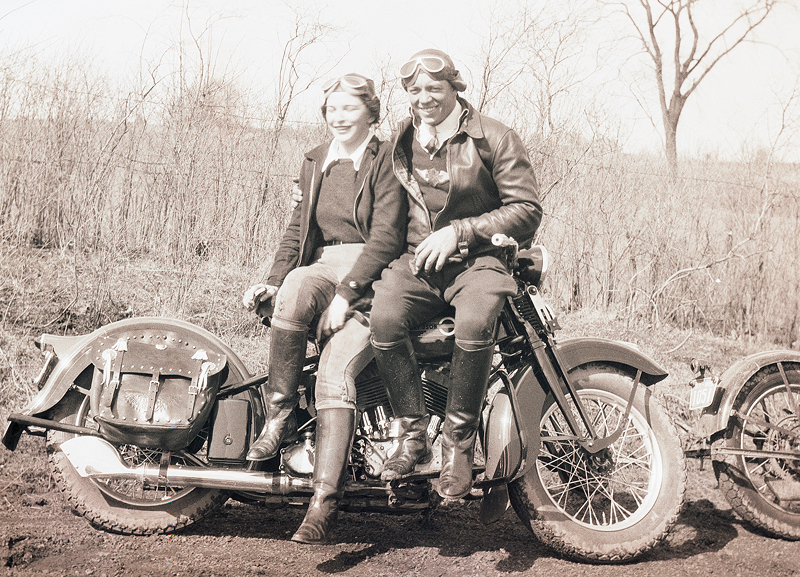
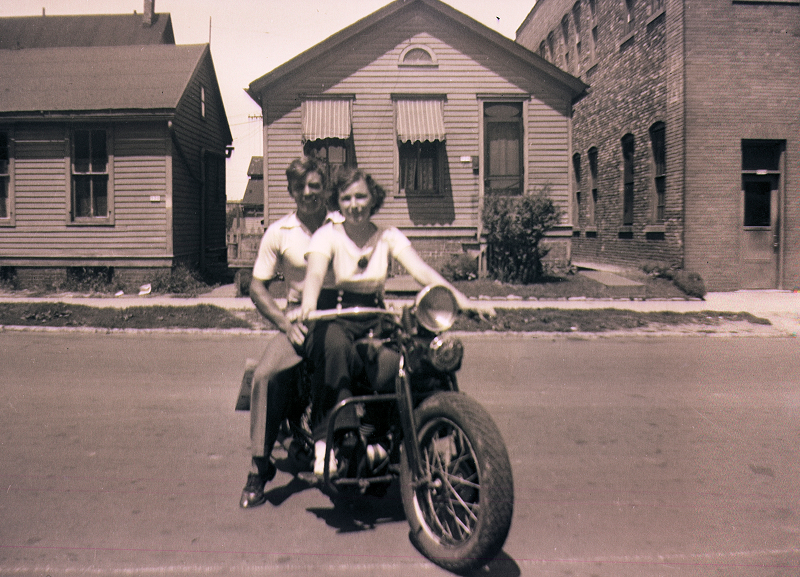
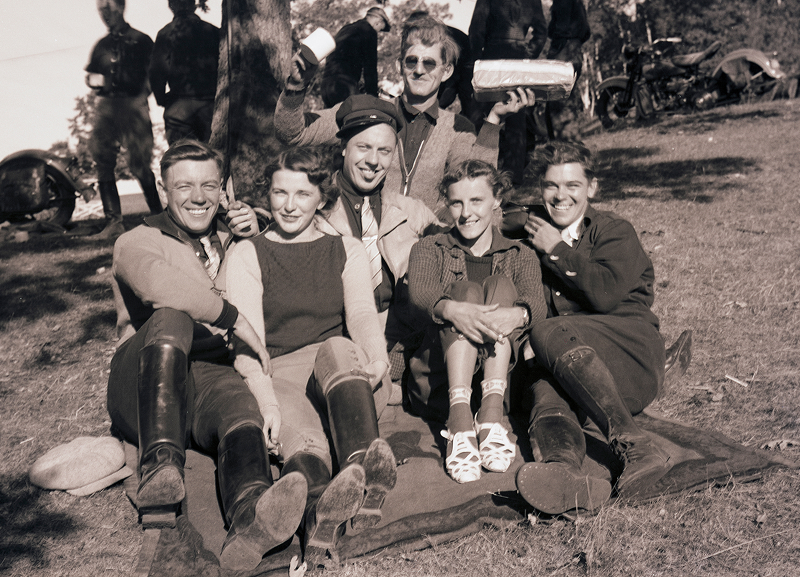
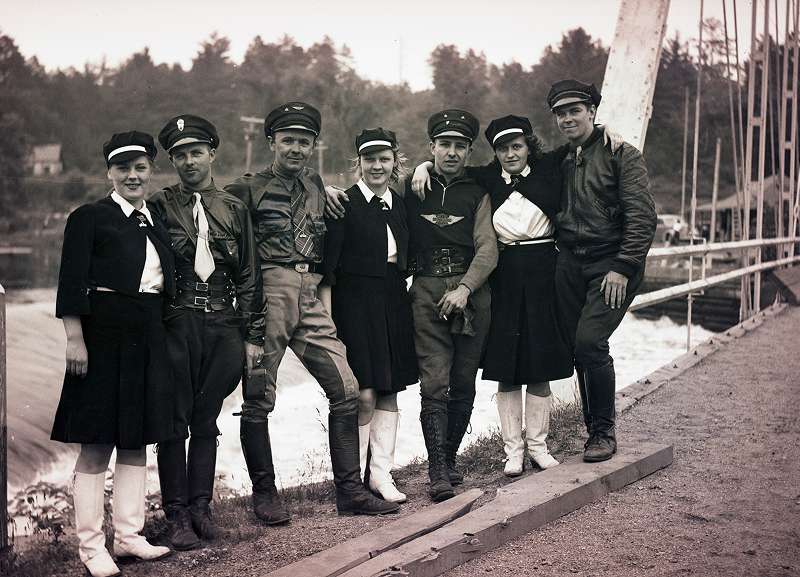
Gus wasn’t just a casual rider, either. He was a fierce competitor who placed in local runs across the region and took on one of the toughest tests out there at the time: the Jack Pine Endurance Run. First held in 1923, the Jack Pine Enduro is a legendary race typically held in Michigan every year.
It’s a two-day, 500-mile grind through rough terrain, where every mile is a test of skill and endurance. Riders come from all over to chase the finish, and if they’re good enough, the coveted cowbell. In 2026, the Jack Pine marks its 100th running, a century of testing riders the hard way.
At the 1947 Jack Pine, Stenmark rose above the field, winning the Class A Solo competition with a score of 698, putting his score third-highest across all classes. It wasn’t an easy year to do it, either. Out of 122 starters, only 14 finished.
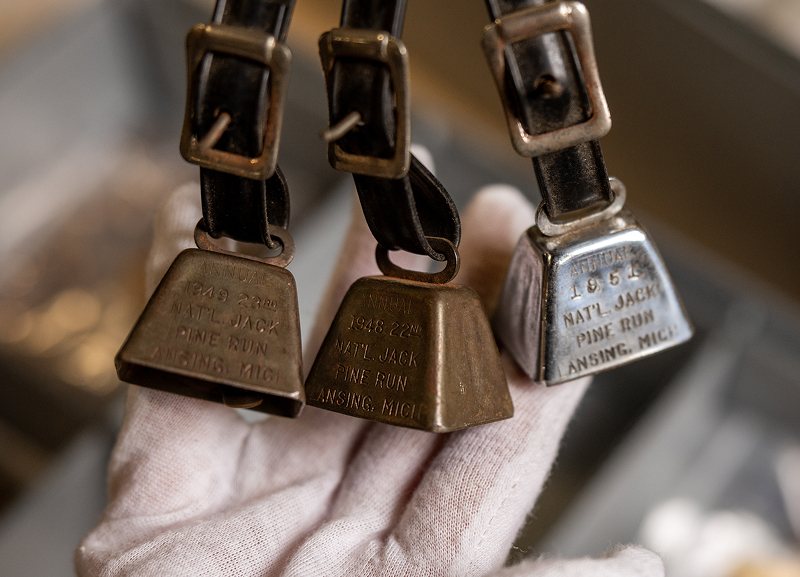
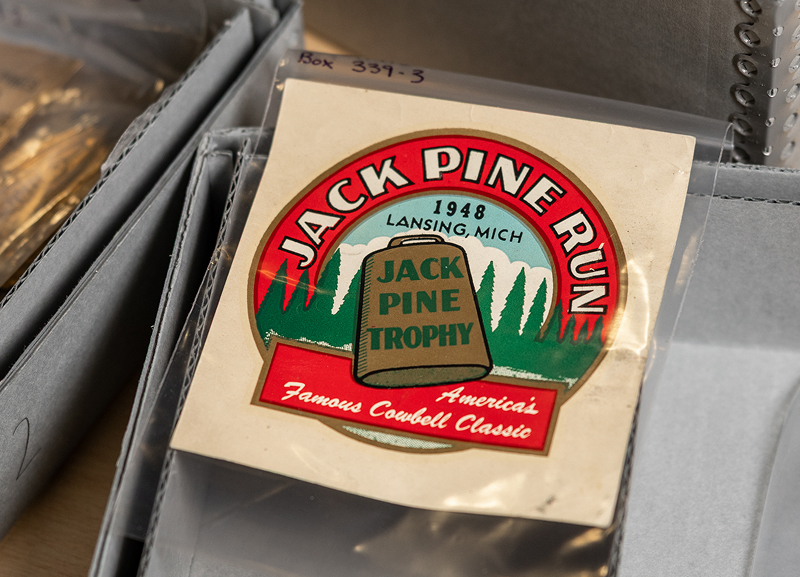
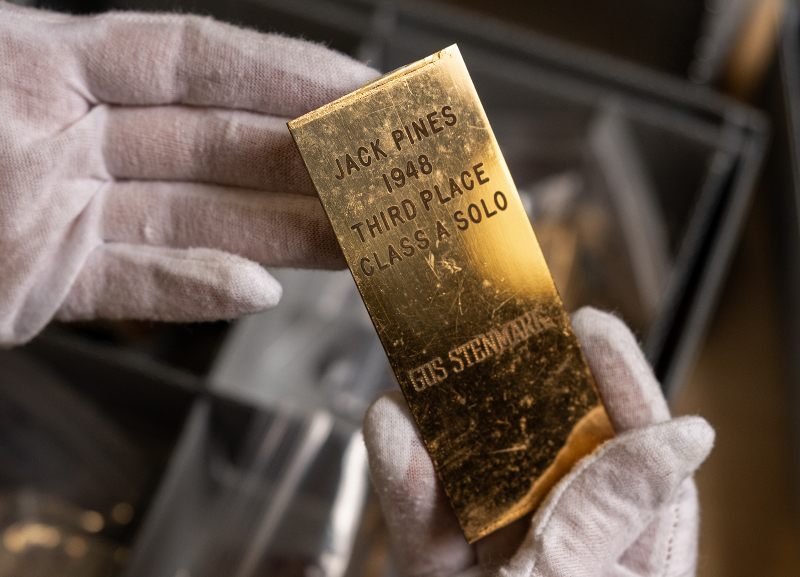
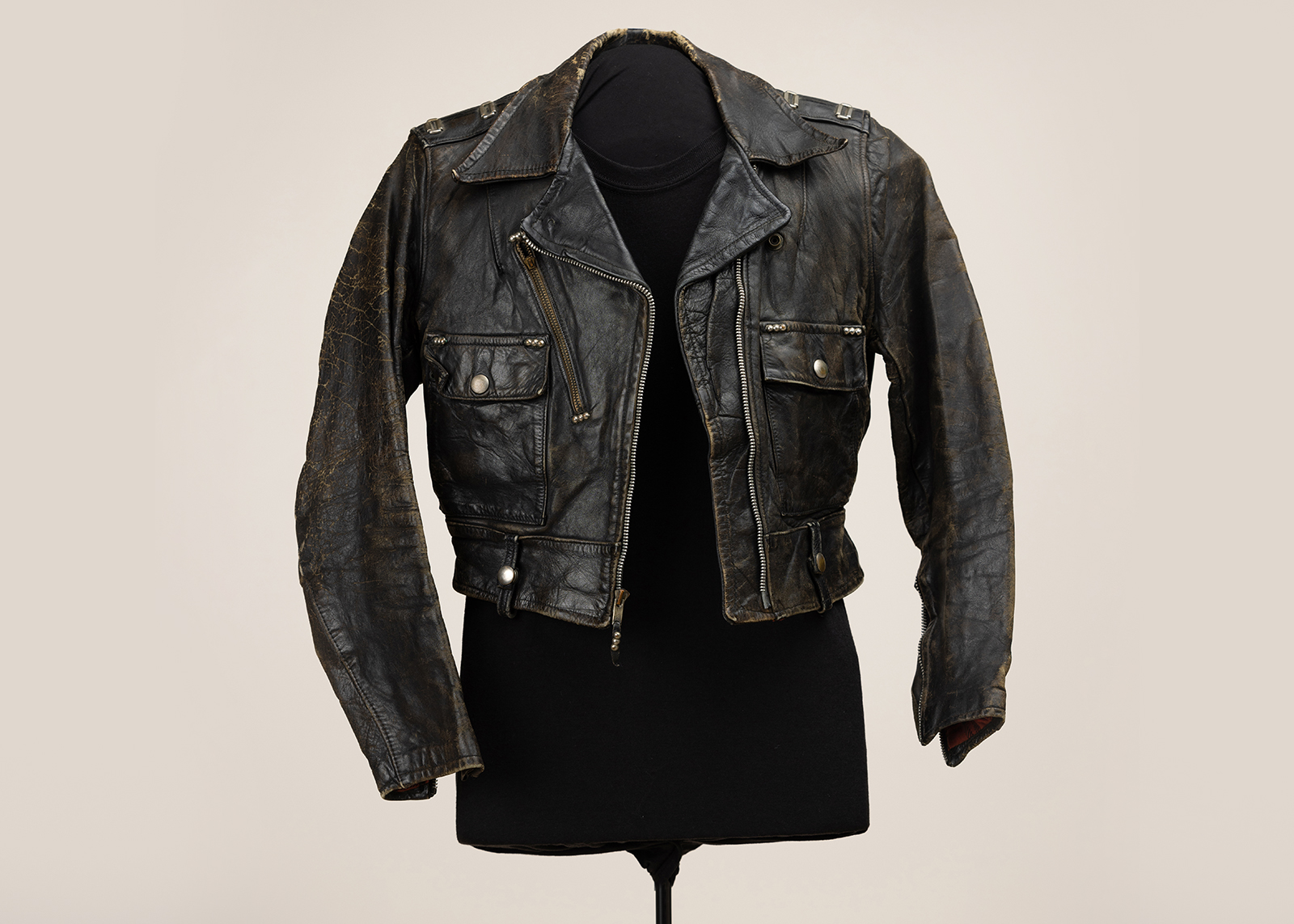
Gus’ son, Allan Stenmark, gifted the museum a collection of his father’s riding mementos, including many trophies, pins, and medals documenting his racing achievements and club activities through 1950s. Allan remembers playing with his father’s trophies as a child.
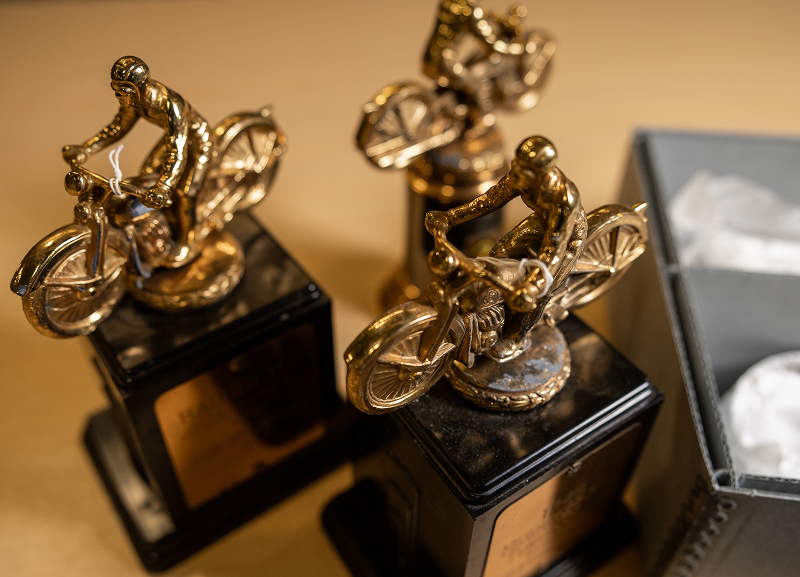
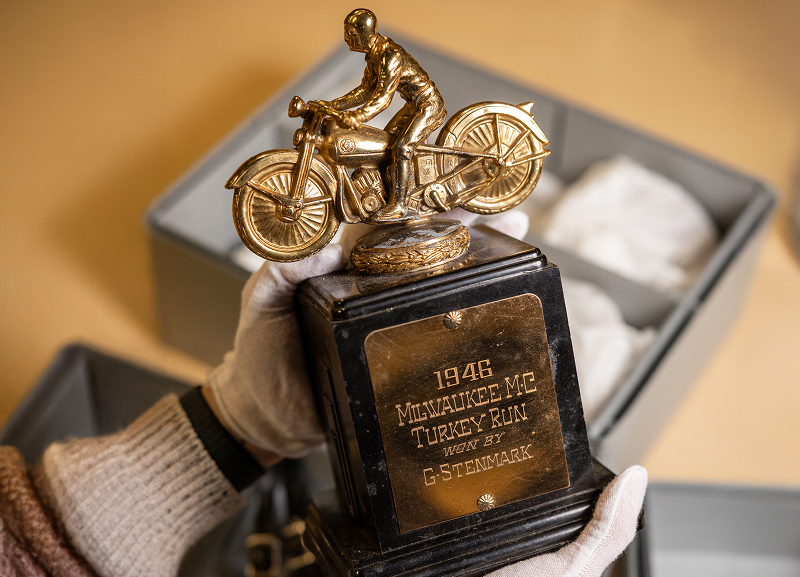
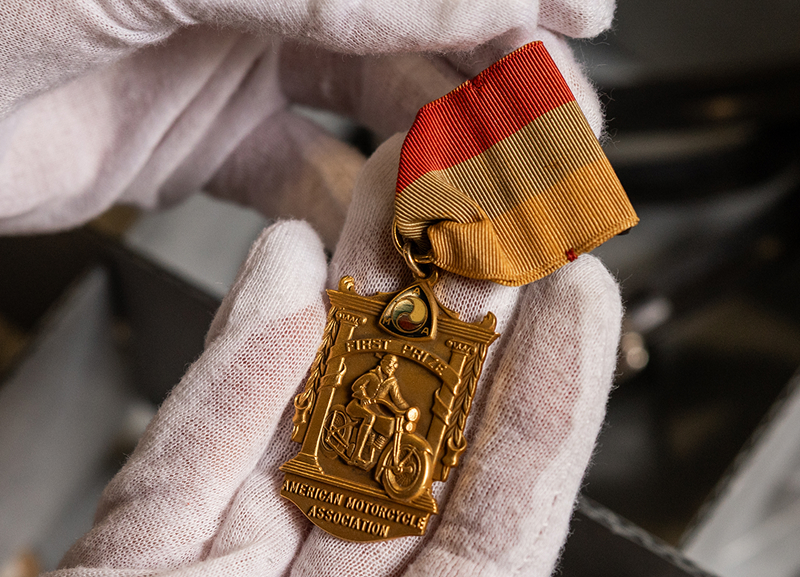
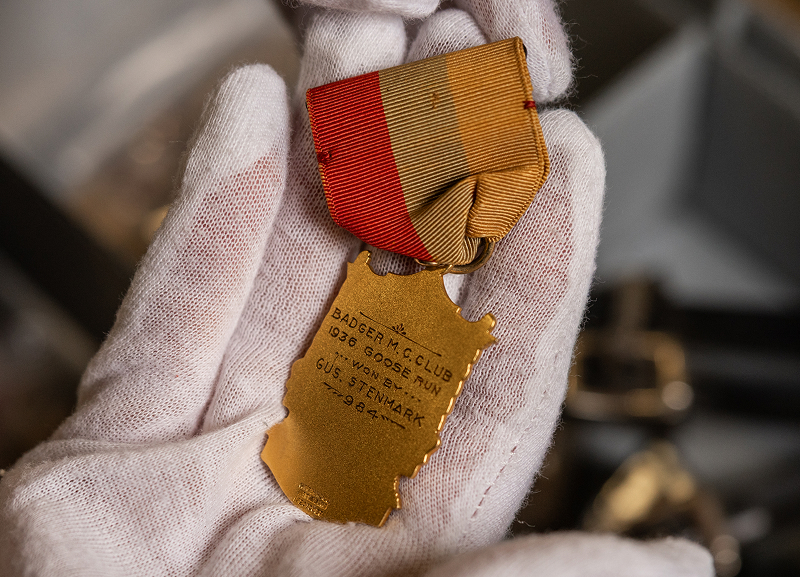
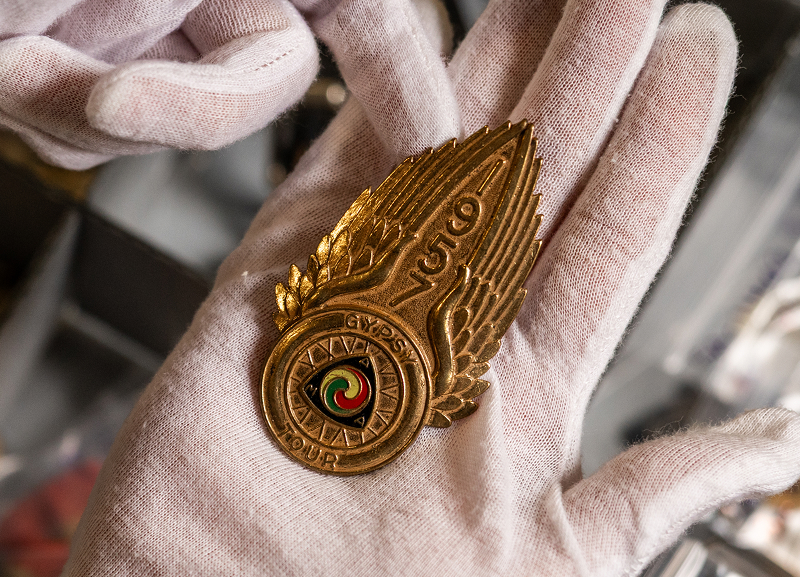
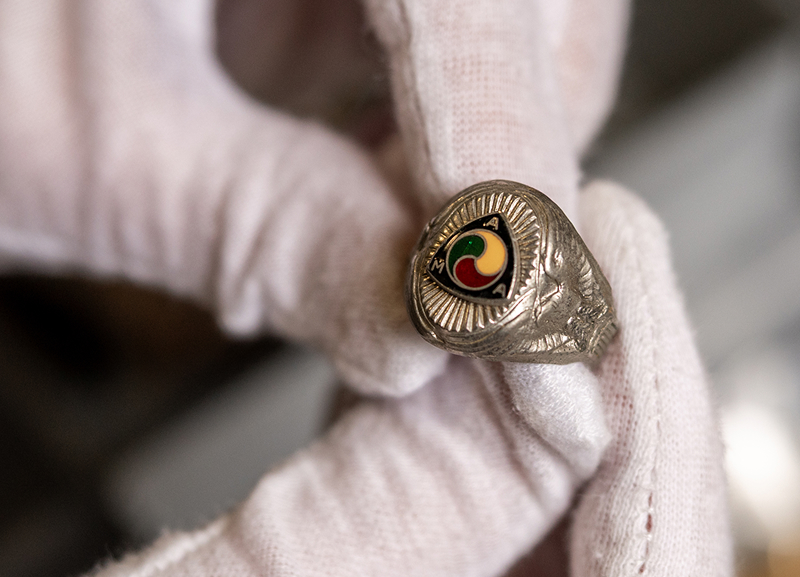
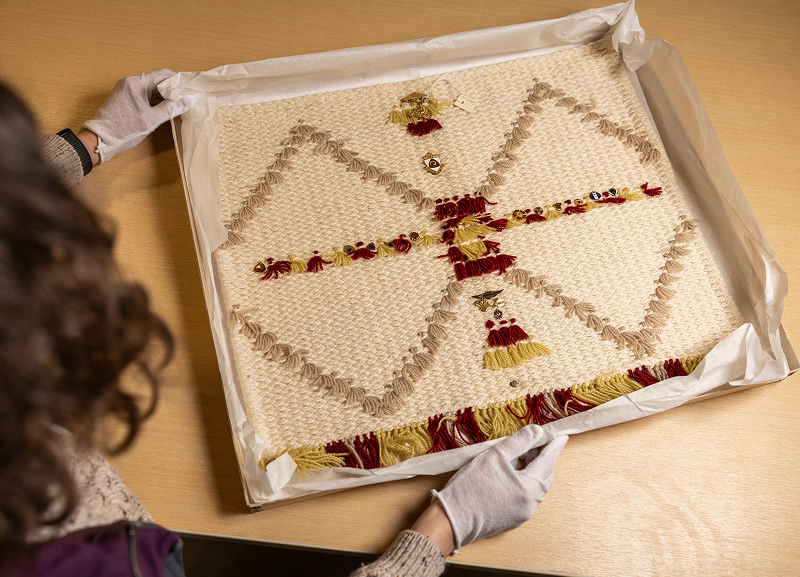
One of the most unique items is a handwoven wall hanging made by Gus’s mother. Seventeen pins line it — mostly AMA membership pins — each one earned somewhere along the way. From its condition, we can assume it was something Gus truly cherished. Around it, photographs fill in the story, capturing moments from a 1937 ride through Sweden and Norway and time spent with the Badger Motorcycle Club.
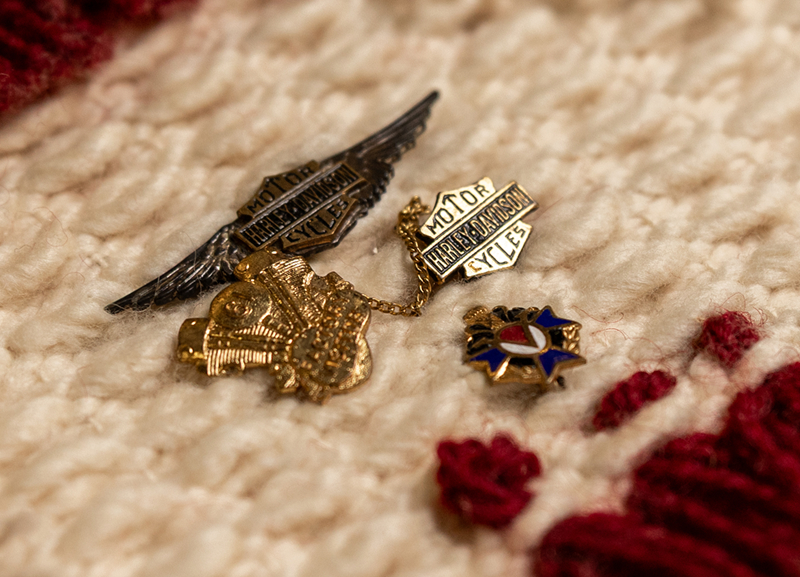
These pieces don’t just mark victories or milestones, they carry the spirit of the rider who earned them, preserving moments that might otherwise fade with time. Together, they tell a story that goes beyond the machine, capturing the grit, passion, and community that define a life on two wheels. You can experience Gus Stenmark’s story, and countless others like it, up close at the Harley-Davidson Museum in Milwaukee, where every artifact keeps the ride alive.
EXPERIENCE THE HISTORY OF HARLEY-DAVIDSON
Discover culture and history through stories and exhibits that celebrate expression, camaraderie and love for the sport.
EXPLORE MORE FROM THE ARCHIVES

RAY PRICE AND THE FUNNY BIKE
Discover the remarkable story of Ray Price, the Harley-Davidson drag racing pioneer whose groundbreaking Funny Bike innovations helped shape the future of motorcycle drag racing.
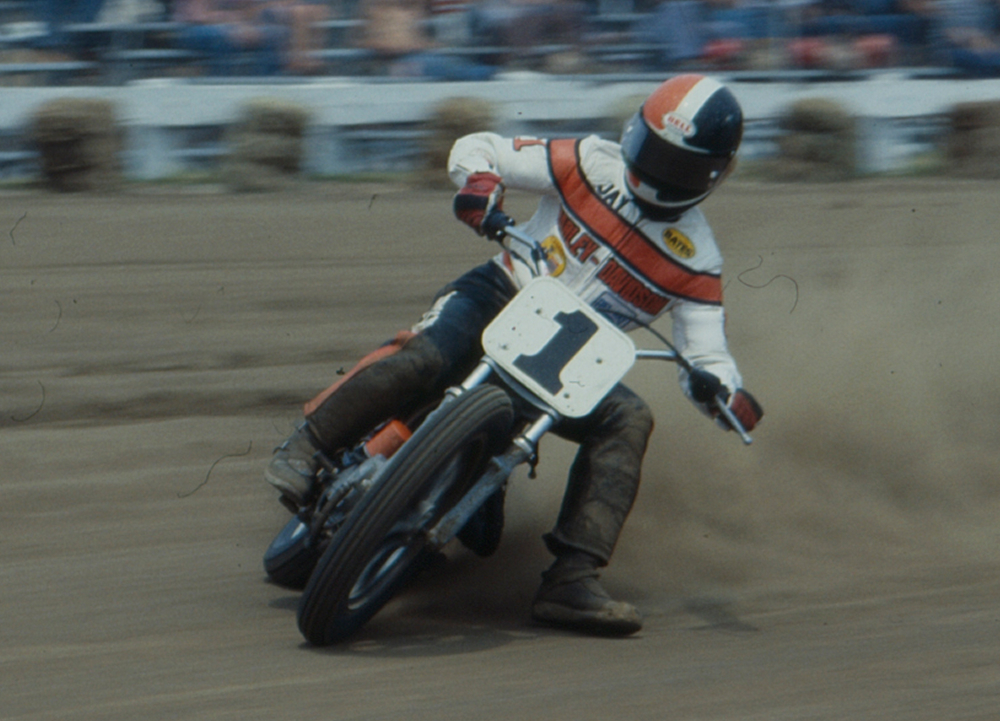
SPRINGSTEEN’S RISE: THE MAKING OF A FLAT TRACK LEGEND
Jay Springsteen overcame early adversity to become one of flat track racing's most successful riders, earning three consecutive Grand National titles and a place among Harley-Davidson legends.
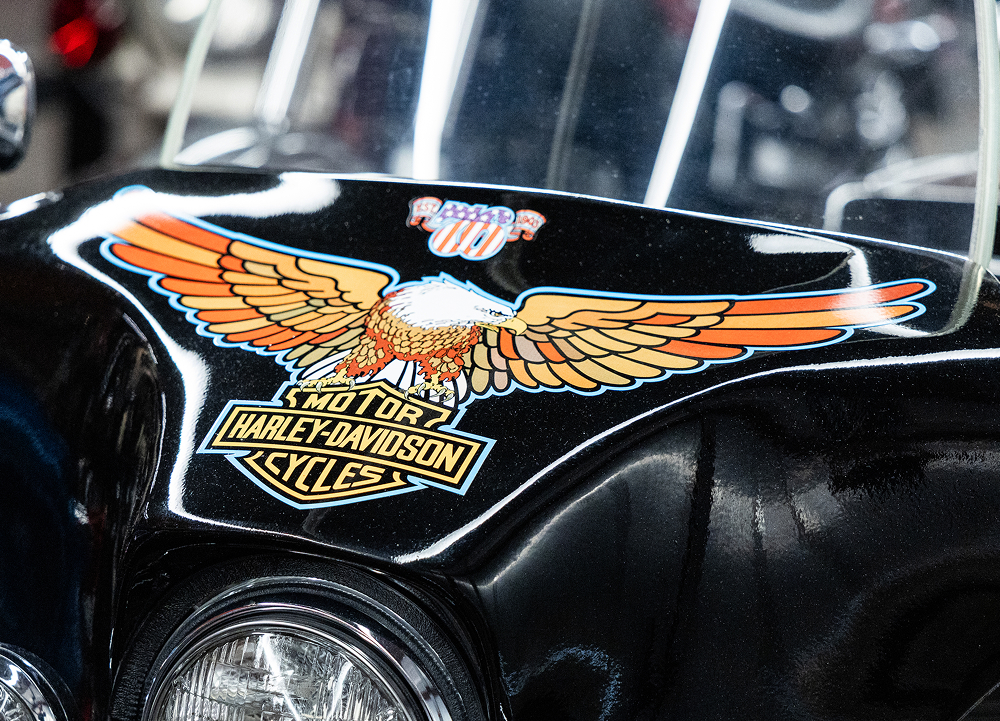
THE EAGLE, THE NUMBER ONE, AND THE RETURN OF THE BAR & SHIELD
How a Bicentennial-era design idea from Willie G. Davidson gave rise to the eagle and modern Bar & Shield that continue to define Harley-Davidson today.
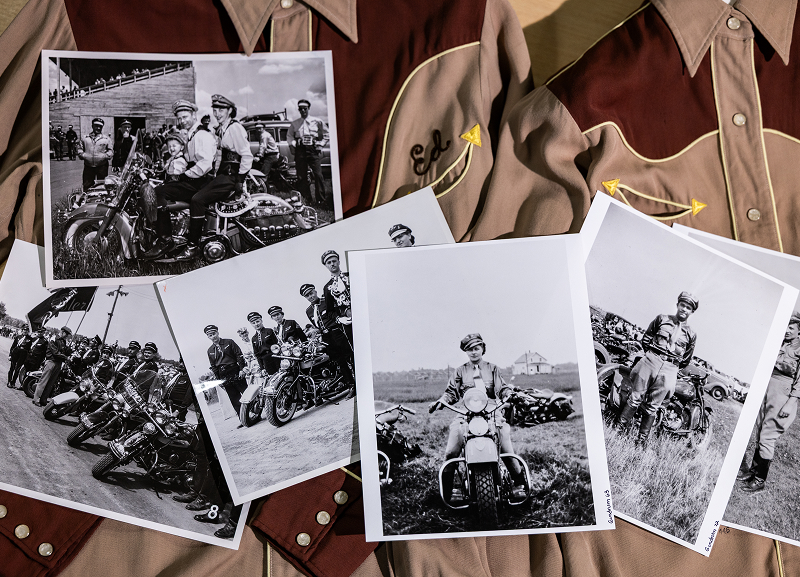
KNIGHTS OF THE HIGHWAY: THE STORY BEHIND MOTORCYCLE CLUB UNIFORMS
From tailored uniforms to patch-covered vests, motorcycle riders have long used what they wear to shape their identity, build community, and challenge public perceptions of the sport.
ROUTE 66: A TESTAMENT TO THE SPIRIT OF THE OPEN ROAD
Route 66 has evolved from a simple stretch of pavement into a defining experience for generations of Harley-Davidson riders.
HARLEY-DAVIDSON RIDES FOR LIBERTY
As the Statue of Liberty prepared for her 100th anniversary, Harley‑Davidson riders united coast to coast to celebrate freedom and help restore an American icon.
FROM WAISTCOAT TO CUT: THE EVOLUTION OF THE MOTORCYCLE VEST
The vest may have started out as a practical piece of clothing worn by aristocrats and soldiers, but today, it's one of the most iconic symbols of motorcycle culture.
THE '76 BICENTENNIAL EDITION: THE BIRTH OF AN ICON
The 1976 Liberty Edition fused American patriotism with Harley‑Davidson craftsmanship, creating a landmark design that still resonates as a symbol of freedom and identity.
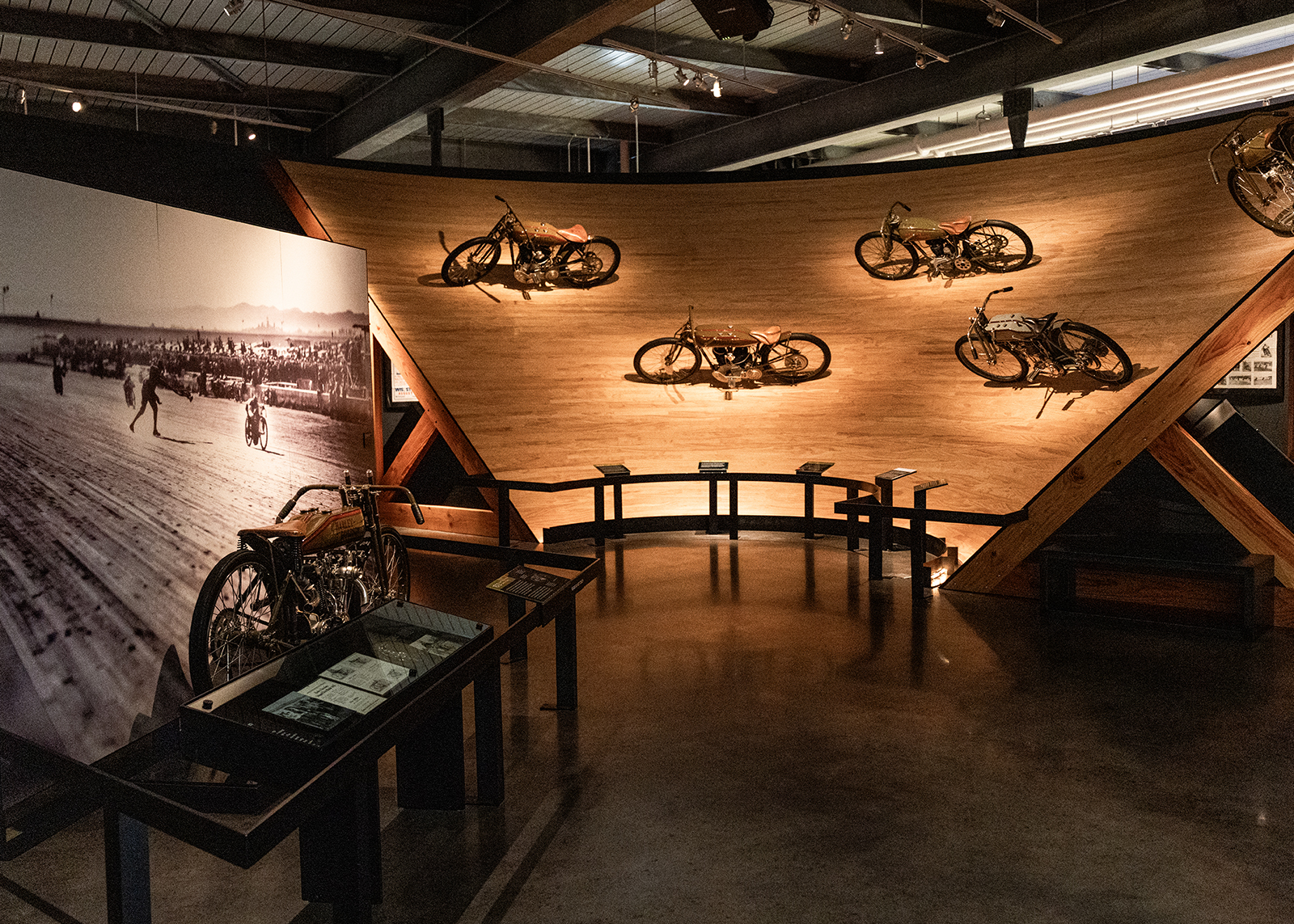
LIFE ON THE MURDERDROME: H-D AND THE SPORT THAT TERRIFIED EVERYONE
Long before racing glory, Harley-Davidson’s uneasy entry into board track competition was lived on the edge by riders like L.E. Bowen.
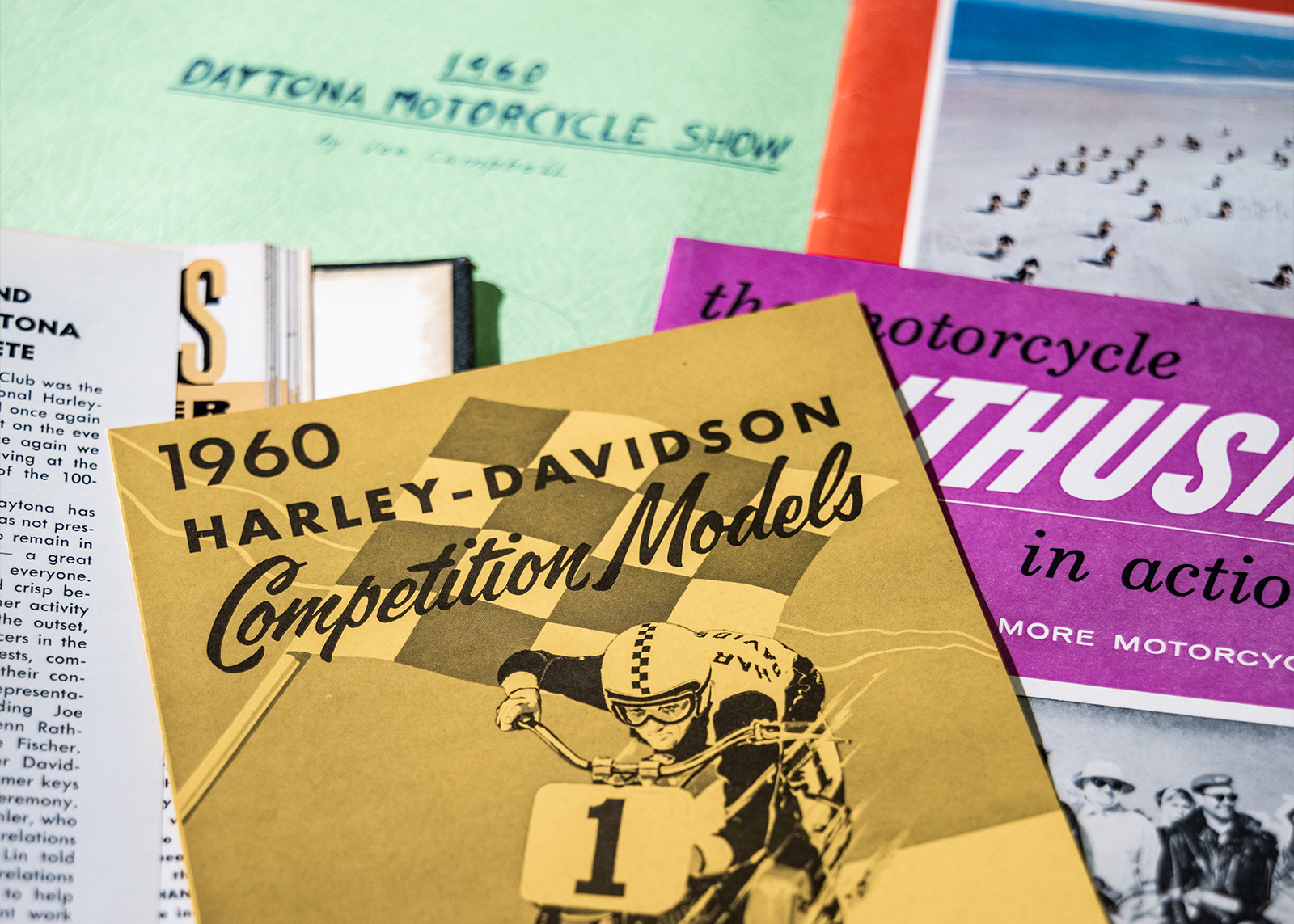
FLASHBACK: STEP INSIDE THE DAYTONA 1960 MOTORCYCLE SHOW
Daytona Bike Week celebrates its 85th year, offering the perfect moment to look back at the rally’s iconic 1960 roots.
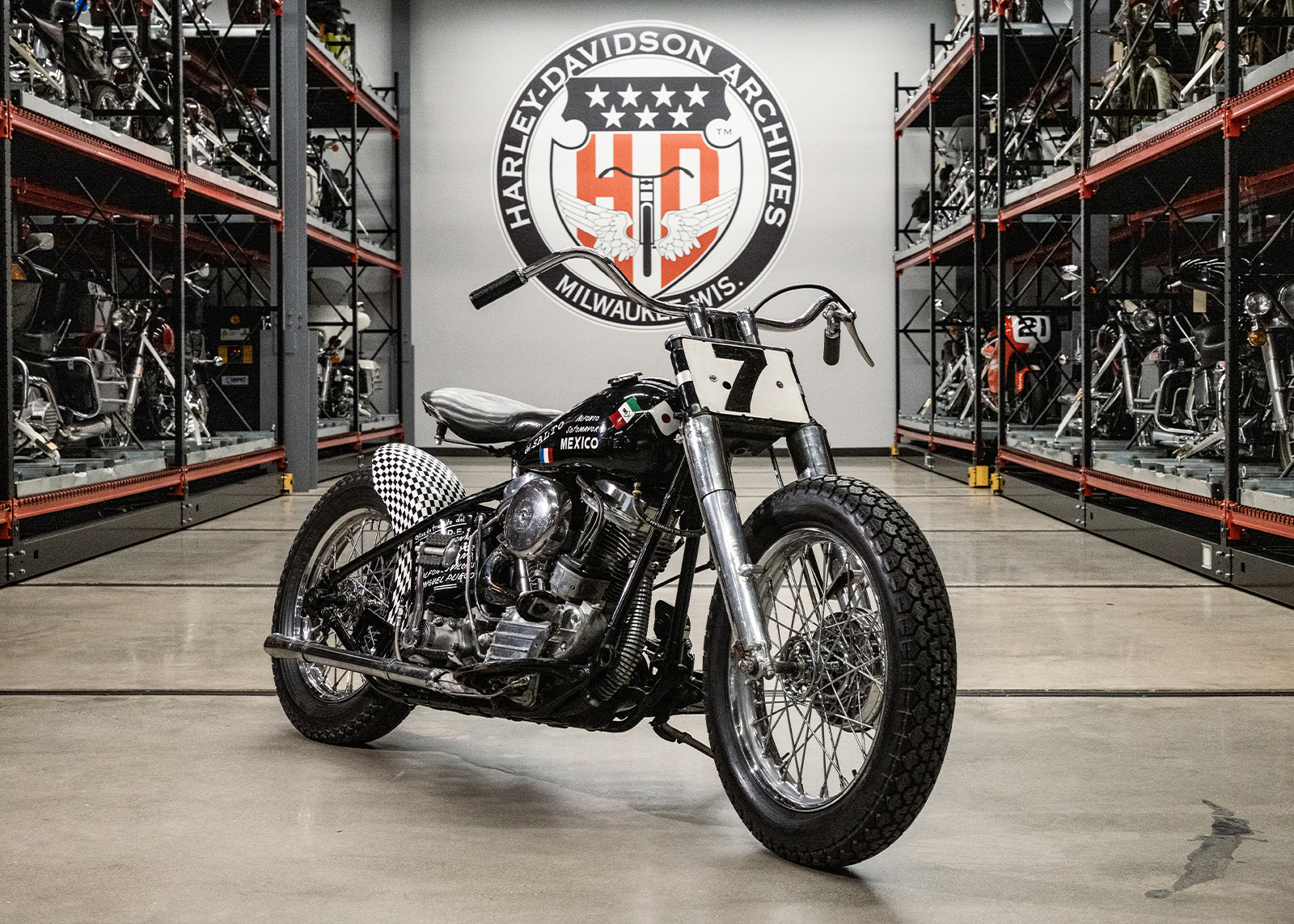
ALFONSO SOTOMAYOR AND MEXICAN STUNT RIDING
Harley-Davidson’s century-long history in Mexico is filled with pioneering riders and legendary stunt performers like Alfonso Sotomayor.
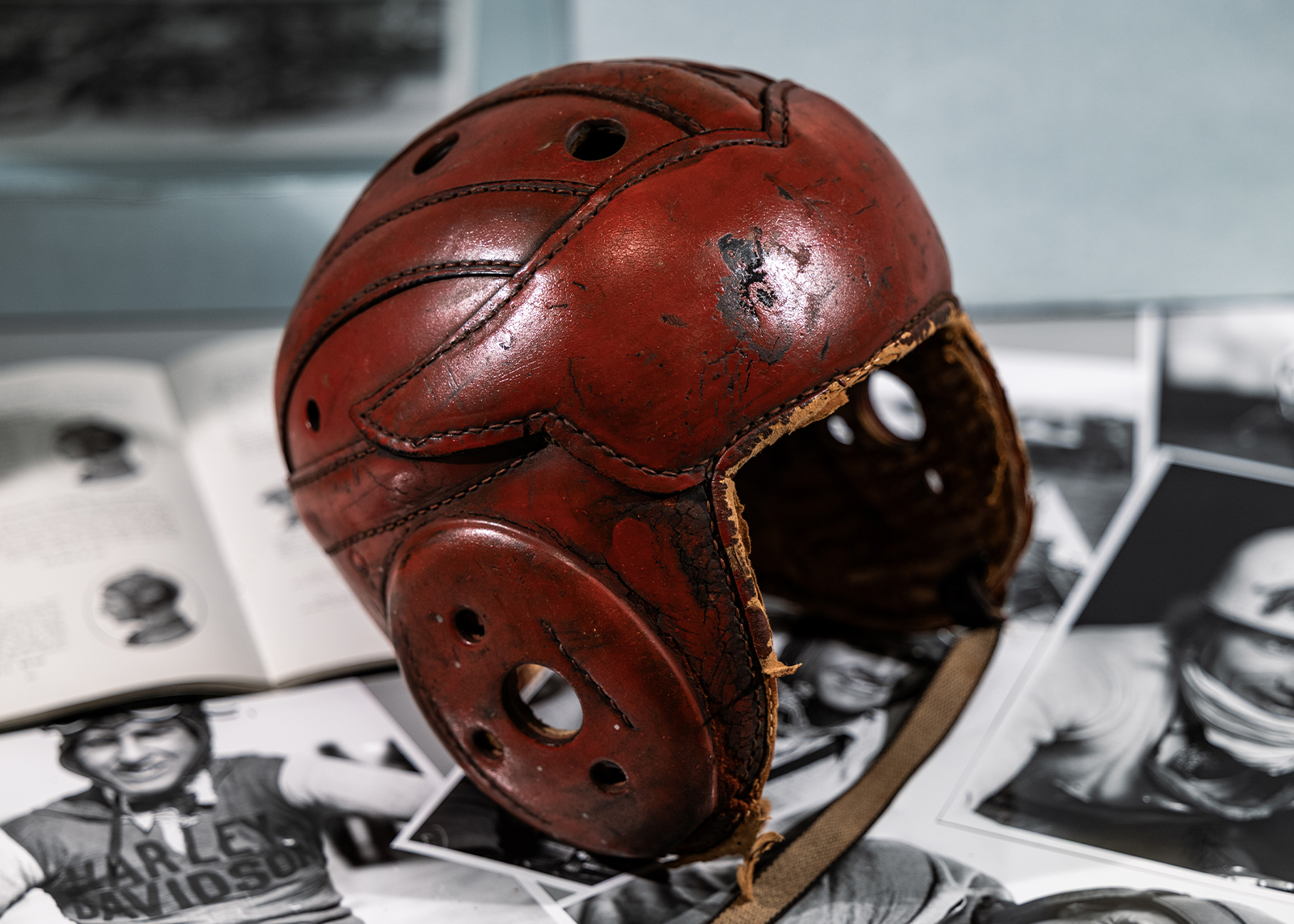
HELMETS THROUGH HISTORY
From humble leather caps to modern safety gear, the evolution of motorcycle helmets balances protection, performance, and pure self-expression.
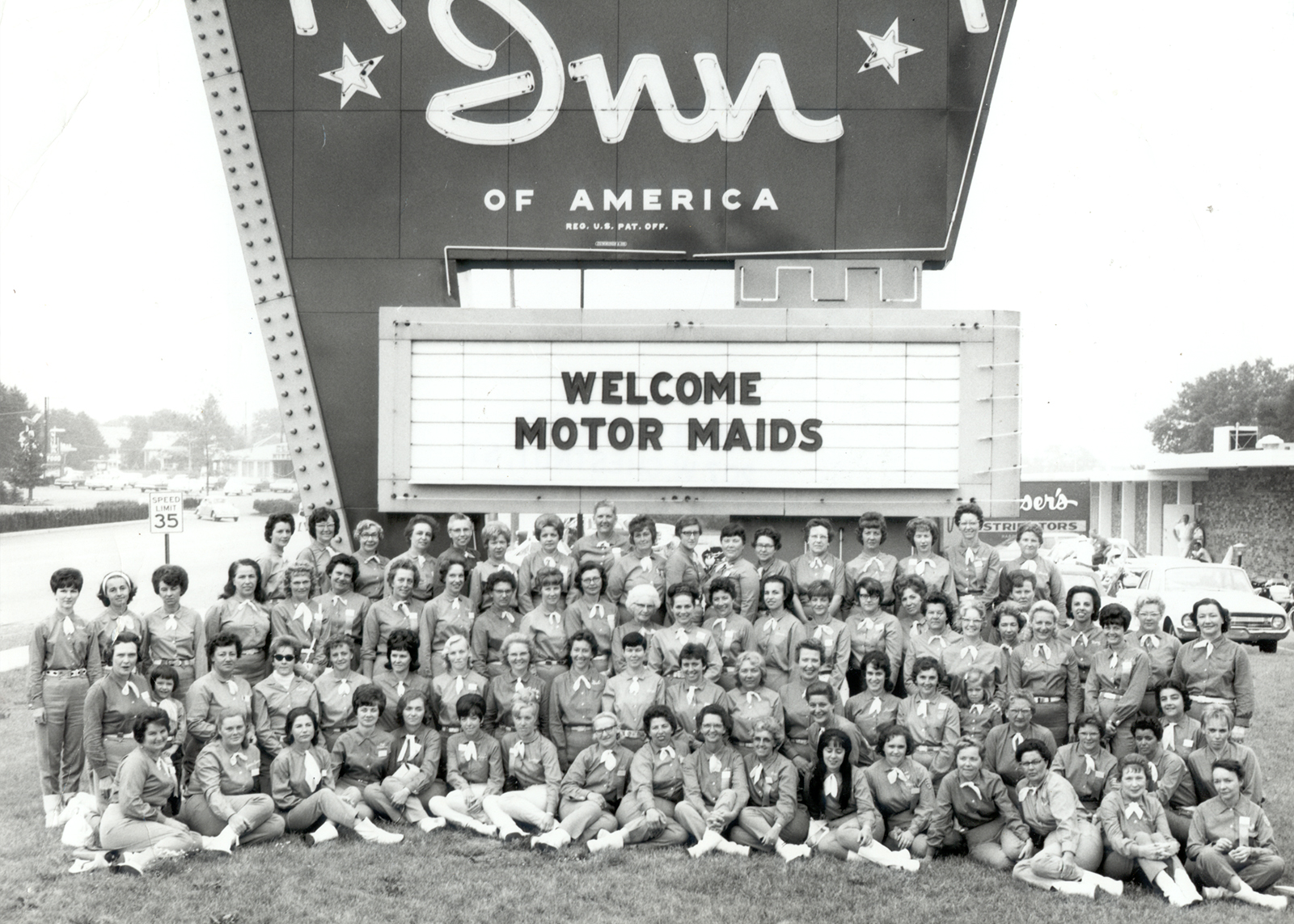
RIDING FORWARD: 85 YEARS OF THE MOTOR MAIDS
Founded in 1940 by pioneers Dorothy “Dot” Robinson and Linda Dugeau, the Motor Maids became the first women’s national motorcycle club.
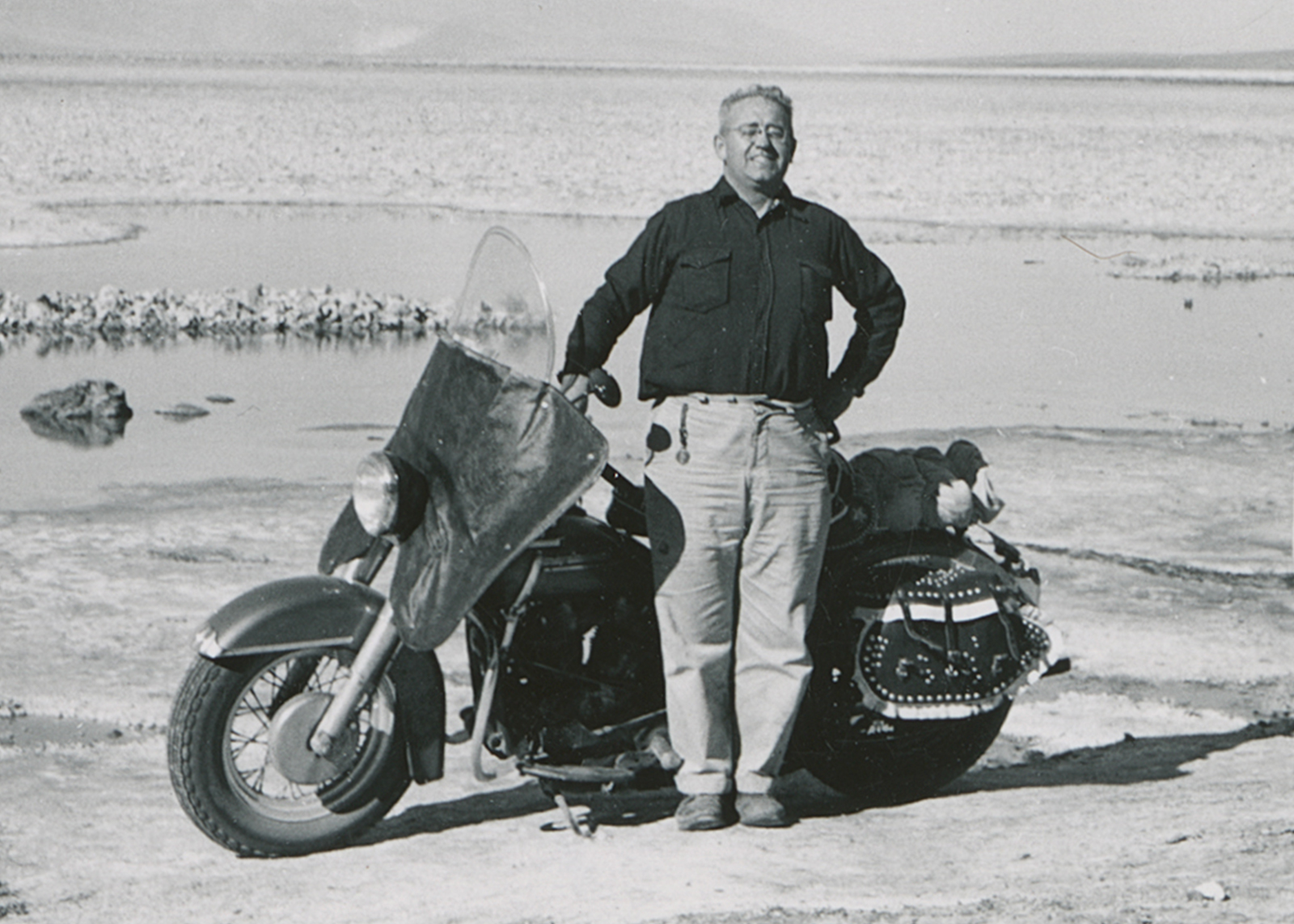
RIDING THROUGH HISTORY: ELDRED R. HARRINGTON’S HARLEY-DAVIDSON ADVENTURES
Eldred R. Harrington, a prolific Enthusiast writer from 1944–1965, was revisited by Harley-Davidson archives during the Hydra-Glide’s 75th anniversary.
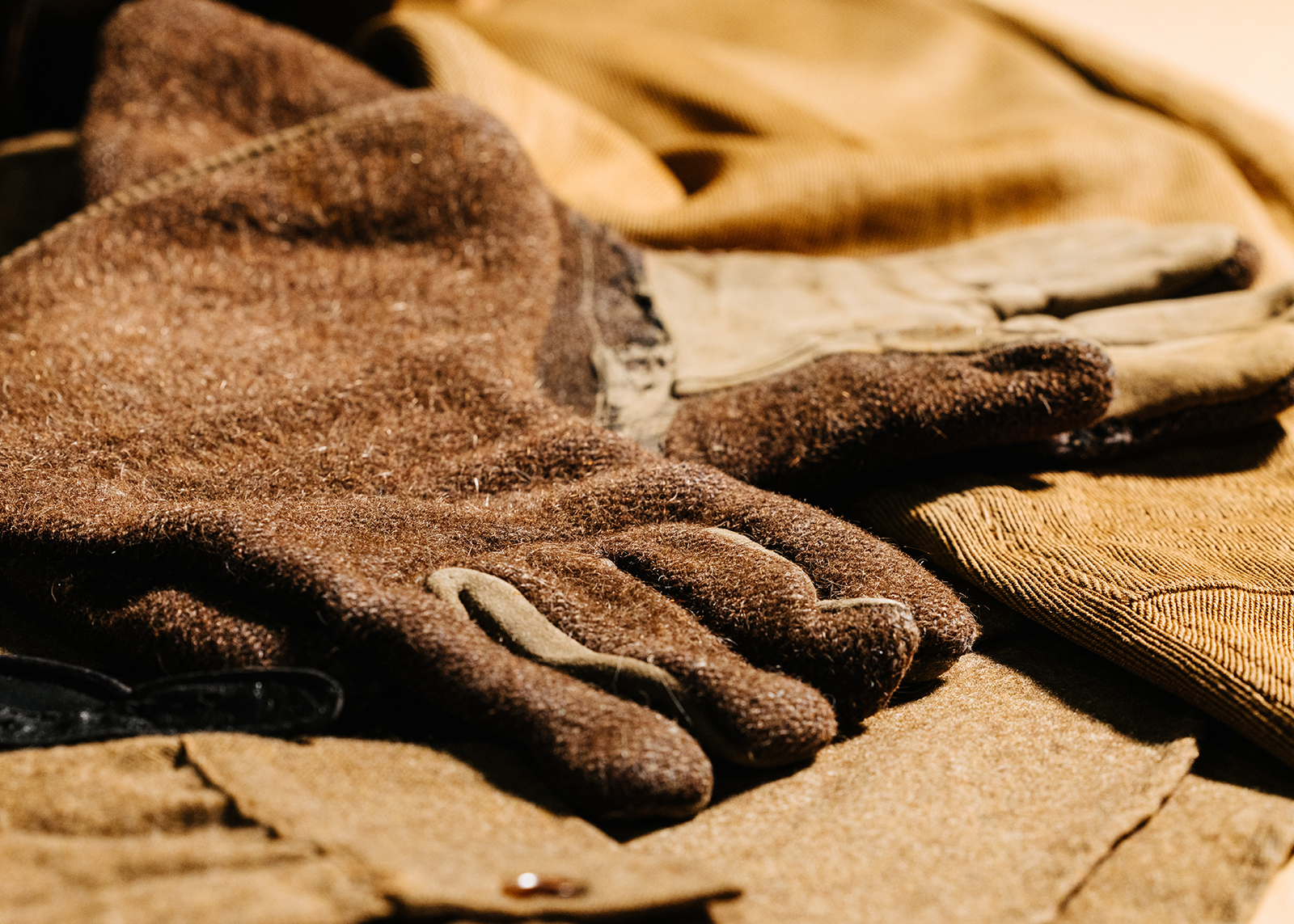
EARLY RIDING WEAR
In the earliest images in the Harley-Davidson archives, riders’ clothing always stands out.
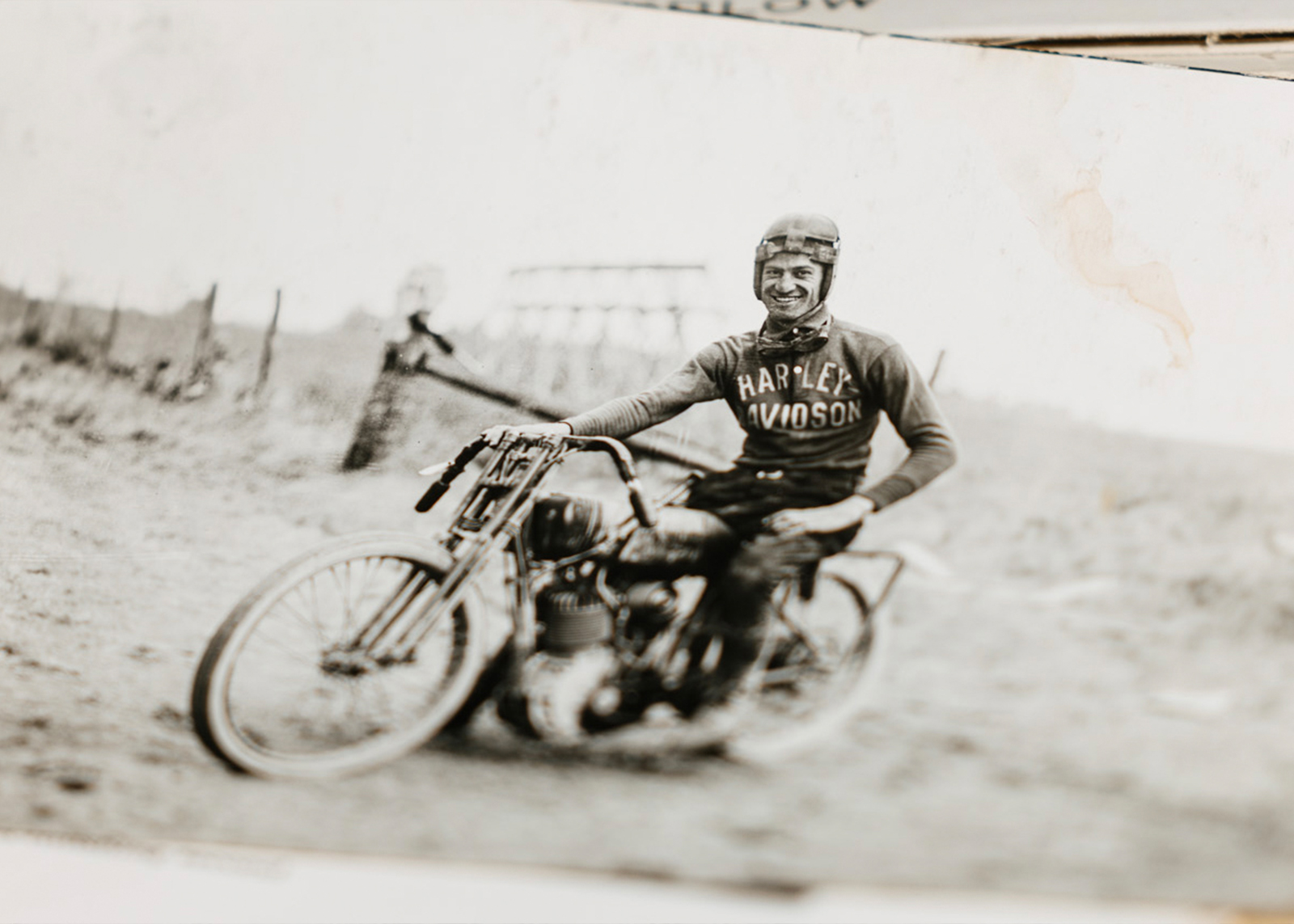
LESLIE “RED” PARKHURST
Parkhurst was a good-natured athlete whose enthusiasm made him a real crowd-pleaser, both on and off the track.
THE WORLD'S FASTEST HARLEY-DAVIDSON
Built for Speed. Born for Glory. The Return of a Legend.