BLUEGRASS HARLEY-DAVIDSON: BEHIND THE GLASS
Words and images by Max Barna
I've learned over the years that Harley-Davidson dealerships are terrible places to judge by first impressions.
I've walked into dealerships that looked modest from the outside only to discover decades of history tucked into every corner. I've also visited beautiful buildings whose greatest feature wasn't the architecture at all, but the people inside them.
Bluegrass Harley-Davidson, just outside Louisville, Kentucky, challenged my assumptions in a completely different way.
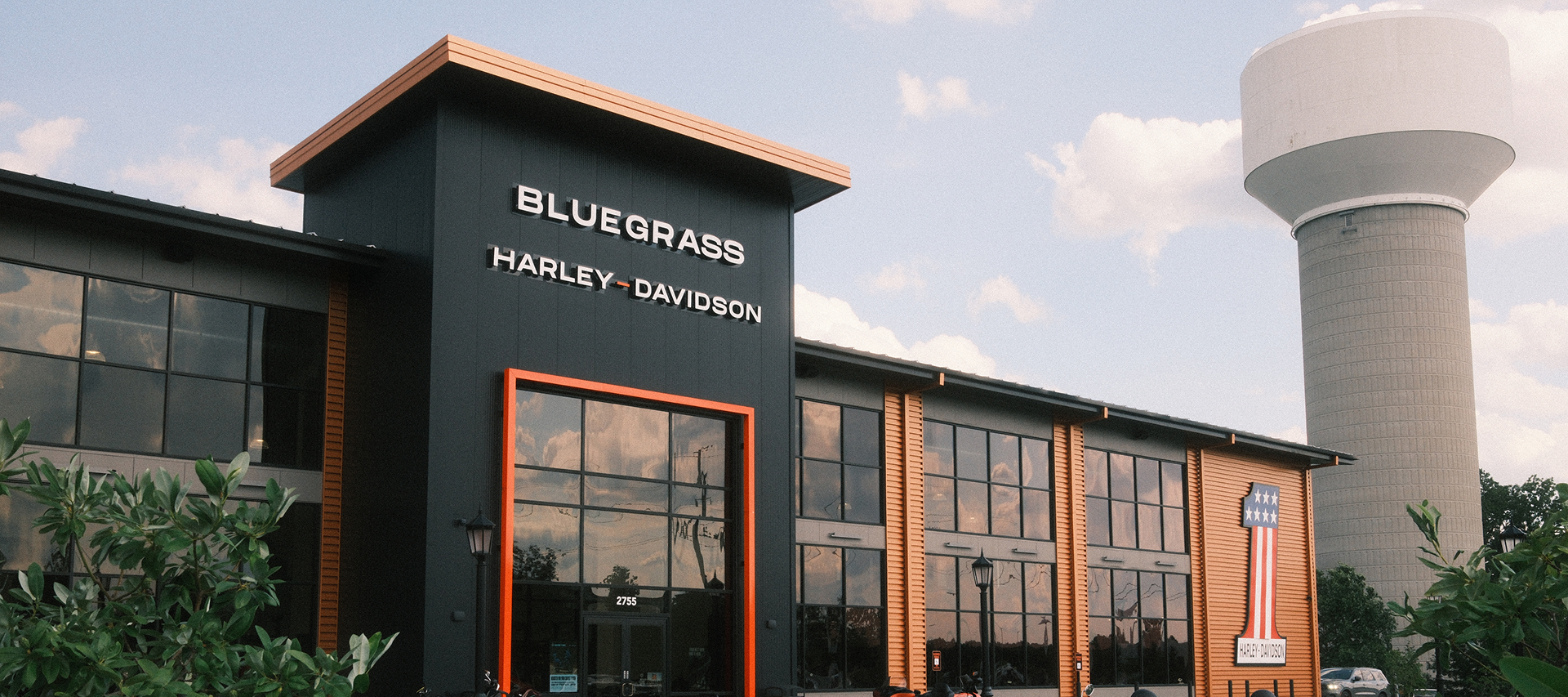
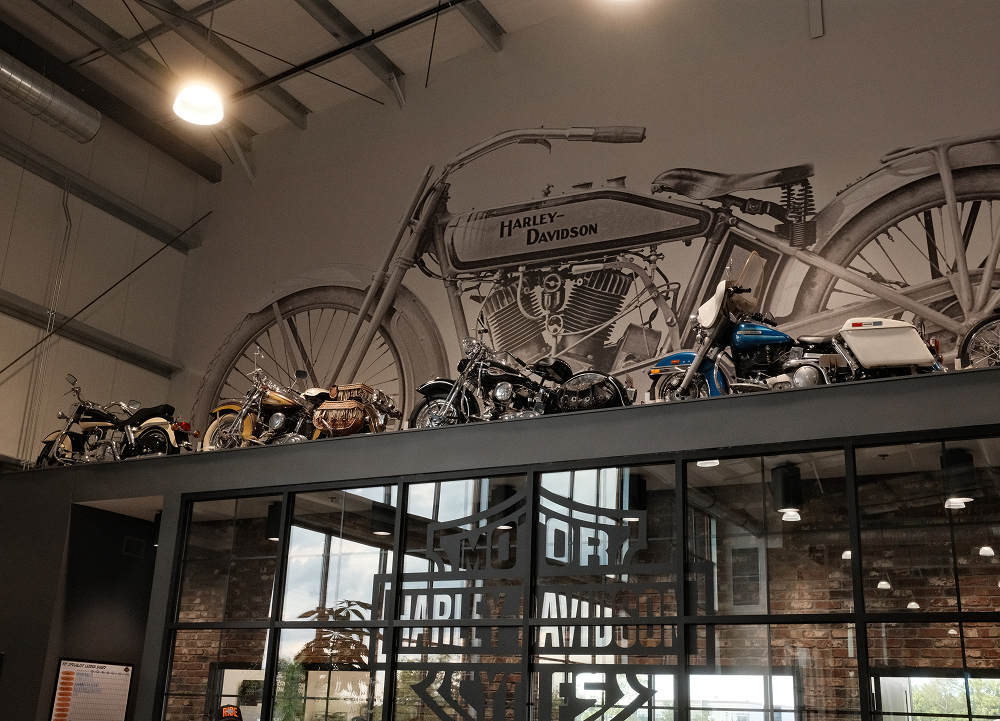
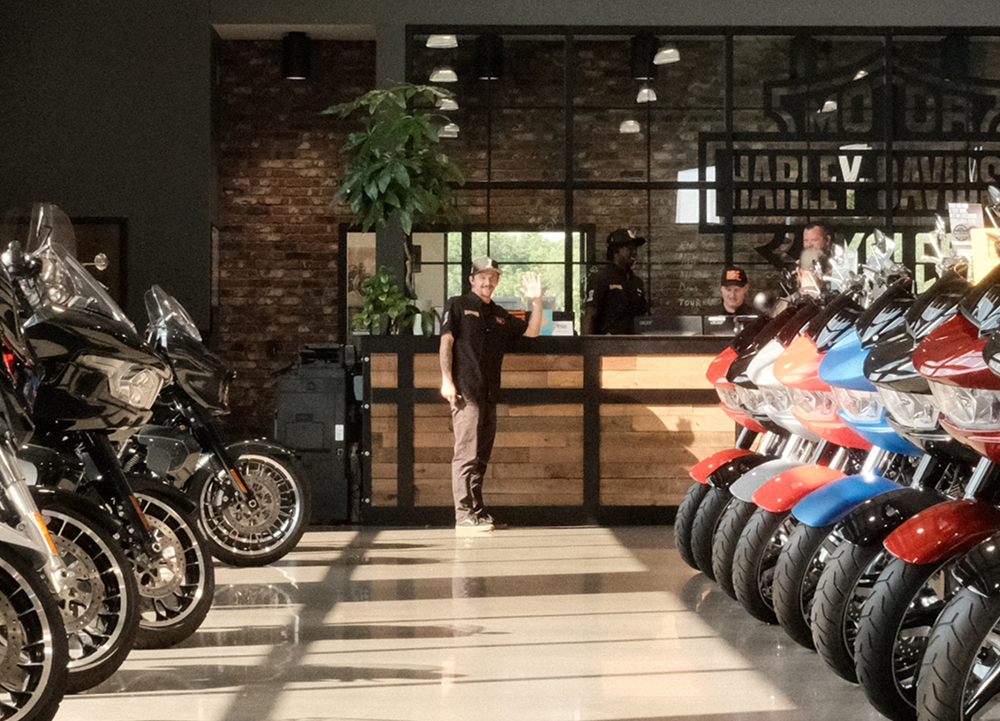
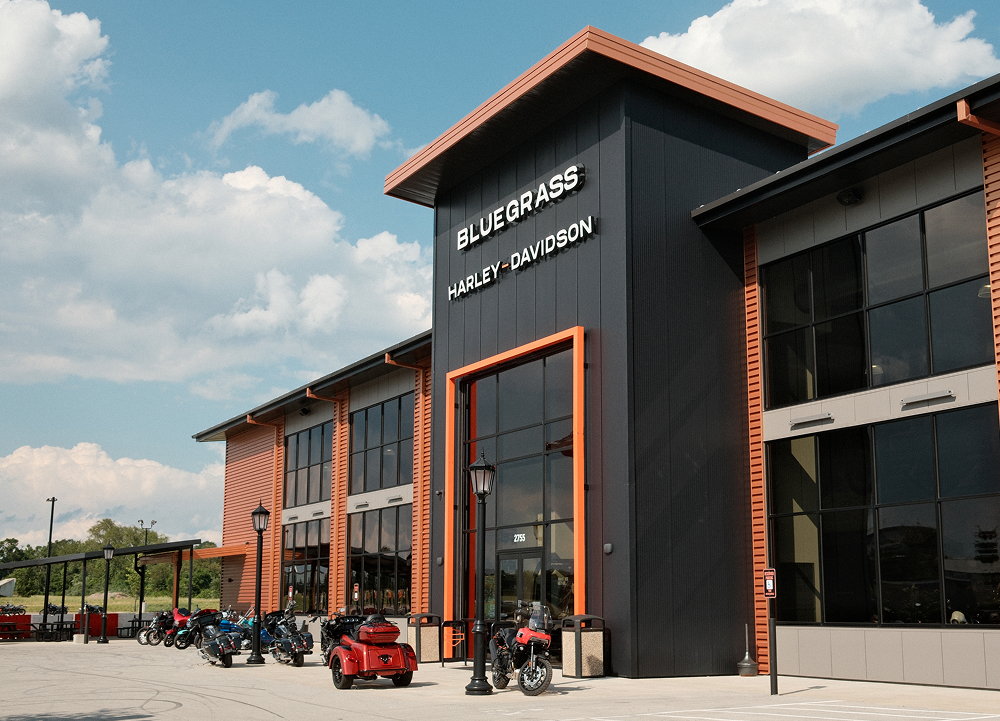
From the moment I pulled into the parking lot, the dealership felt unlike many of the family-owned Harley-Davidson stores I've visited. The building is striking. Black metal panels, towering glass windows, crisp orange accents, and a massive open showroom immediately communicate that this is a modern operation.
Nothing feels out of place. Motorcycles are positioned where your eyes naturally fall and wide walkways invite you deeper into the showroom. Even before opening the front door, you get the sense that someone sat a long while thinking about how customers should experience the space.
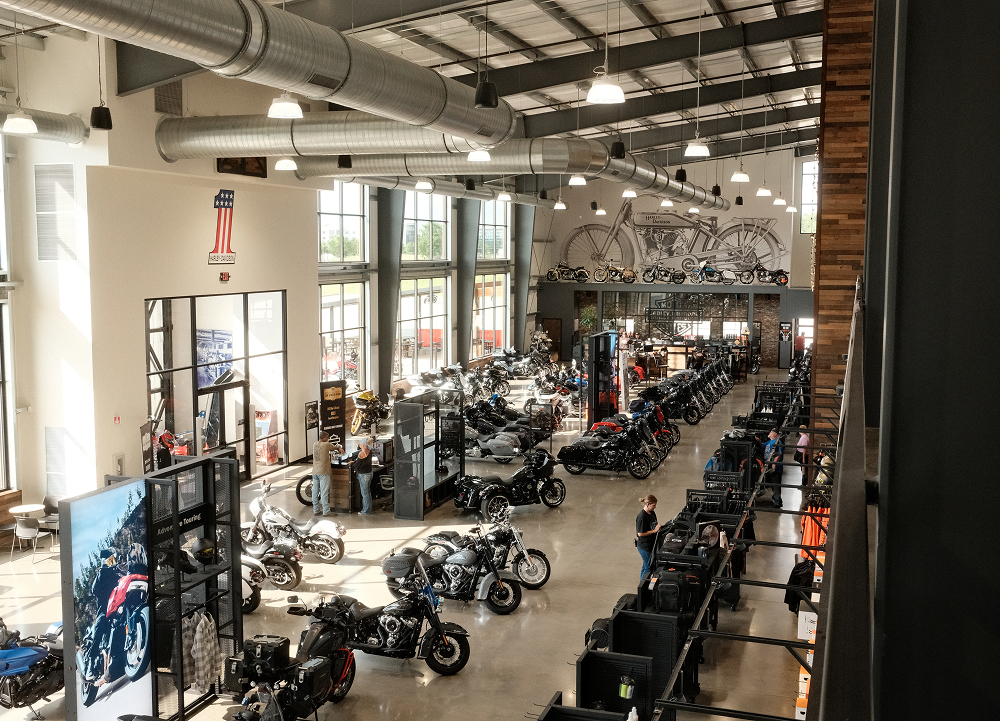
Inside, the showroom stretches out beneath high ceilings and enormous windows that flood the building with natural light. New motorcycles dominate the sales floor. Road Glides and Street Glides, Cruisers, Trikes, and everything in between sit arranged with enough breathing room that every motorcycle feels like its own little display — including the brand new 2026 Super Glide they had basking solitary in the sunlight, waiting for its first ride.
If you've spent time wandering older Harley dealerships housed in former warehouses or family businesses that have grown organically over decades, Bluegrass initially feels almost like the opposite approach.
Frankly, it feels a little engineered. But that’s the idea.
Jason Motz, the dealership's general manager, told me the goal was to create a showroom that immediately puts motorcycles front and center. "We want to have a great display of new motorcycles," he said. He described the feeling the team wanted customers to have the moment they arrived. "When you walk through the front door you feel the excitement."
That philosophy is evident everywhere you look.
BLUEGRASS HARLEY-DAVIDSON CHALLENGED MY ASSUMPTIONS IN A COMPLETELY DIFFERENT WAY. EVEN BEFORE OPENING THE FRONT DOOR, YOU GET THE SENSE THAT SOMEONE SAT A LONG WHILE THINKING ABOUT HOW CUSTOMERS SHOULD EXPERIENCE THE SPACE.
The dealership broke ground on its current facility in 2021 before moving into the building in early 2022, giving the team an opportunity to rethink how customers experience the buying process. Instead of filling every available square foot, the layout emphasizes visibility, openness, and… Motorcycles.
And since selling motorcycles is what they do, it's a remarkably effective first impression. But first impressions, as I quickly discovered, don't tell the whole story.
Jason has spent more than a decade helping shape Bluegrass Harley-Davidson.
Originally from the Cleveland market, Jason joined Bluegrass Harley-Davidson in 2017, three years after the Schipper family purchased the dealership. By then, the organization had already expanded to Fort Wayne, and more growth would soon follow. As the dealership group grew into Evansville, St. Louis, Toledo, and Columbus, Bluegrass evolved into what Jason describes as "the mother ship," serving as the benchmark for how the organization approaches its dealerships.
"We're figuring it out," he said with a laugh. "We've had some rapid growth."
Despite that growth, Jason hasn’t picked up a stuffy corporate executive vibe. He still walks and talks like a humble, regular dude who just really enjoys Harley-Davidson motorcycles.
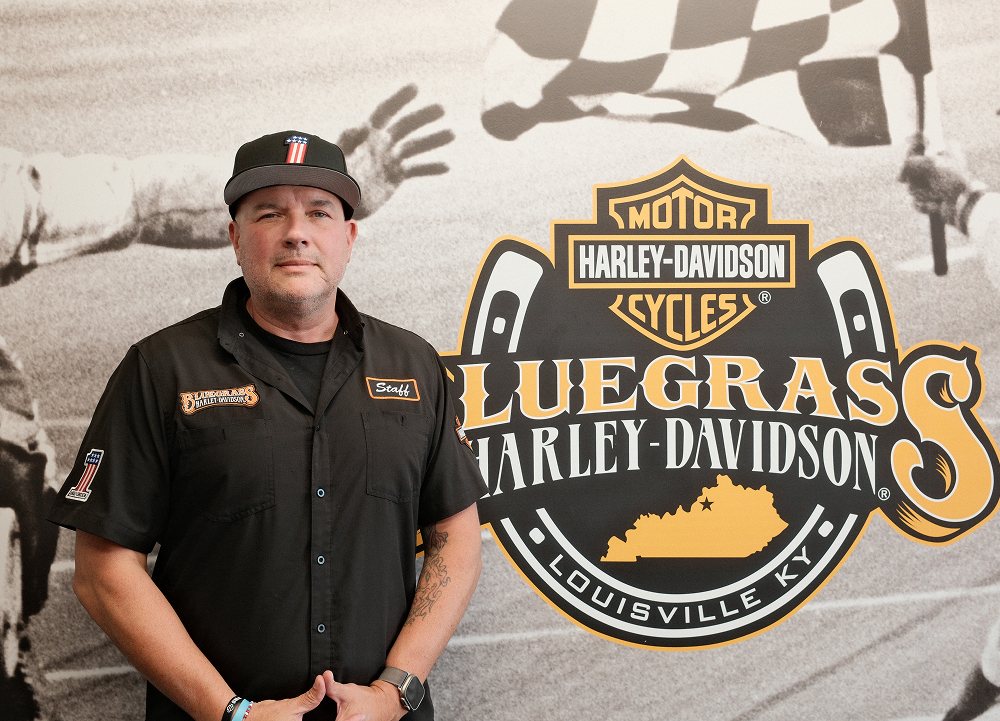
Jason Motz, Bluegrass Harley-Davidson General Manager
"I knew how to ride a dirt bike before I knew how to ride a regular bike," he told me.
That passion is consistent throughout the entire building. Bluegrass employs 51 people, and according to Jason, only two of them don't ride.
As polished as the dealership appears from the outside, the atmosphere behind the scenes is relaxed and fun. Employees tease each other across departments and conversations drift naturally from motorcycles to weekend rides to whatever event happens to be coming up next. Nobody seemed particularly interested in maintaining the kind of stiff professionalism the building itself might suggest.
In fact, Jason acknowledged that many visitors make the same assumption I initially did.
"I think people look at our building and they perceive it a way," he said. "It looks very clean and very official. But then you come inside and you meet us and you realize we're bike guys."
That sentence is important, so read it again. The building works hard, but the people make sure it never takes itself too seriously. And that balance defines nearly everything they do.
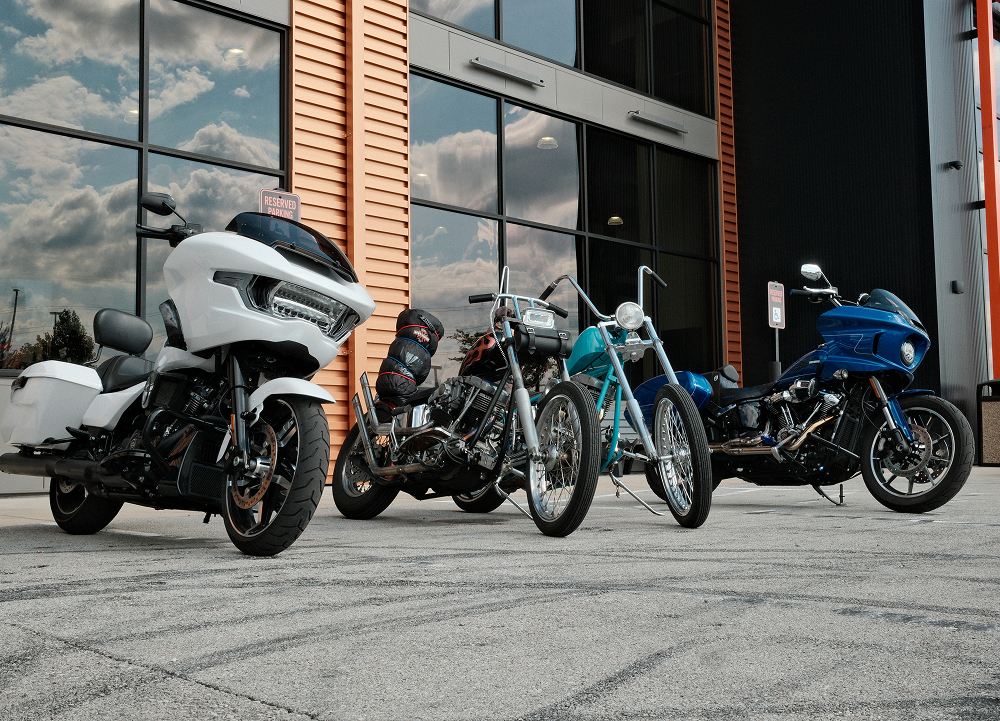
THE LOT OUTSIDE IS LITTERED WITH BURNOUT MARKS. INSIDE, CONVERSATIONS ABOUT SHOVELHEADS AND PANHEADS HAPPEN AS NATURALLY AS DISCUSSIONS ABOUT THE NEWEST TOURING MODELS.
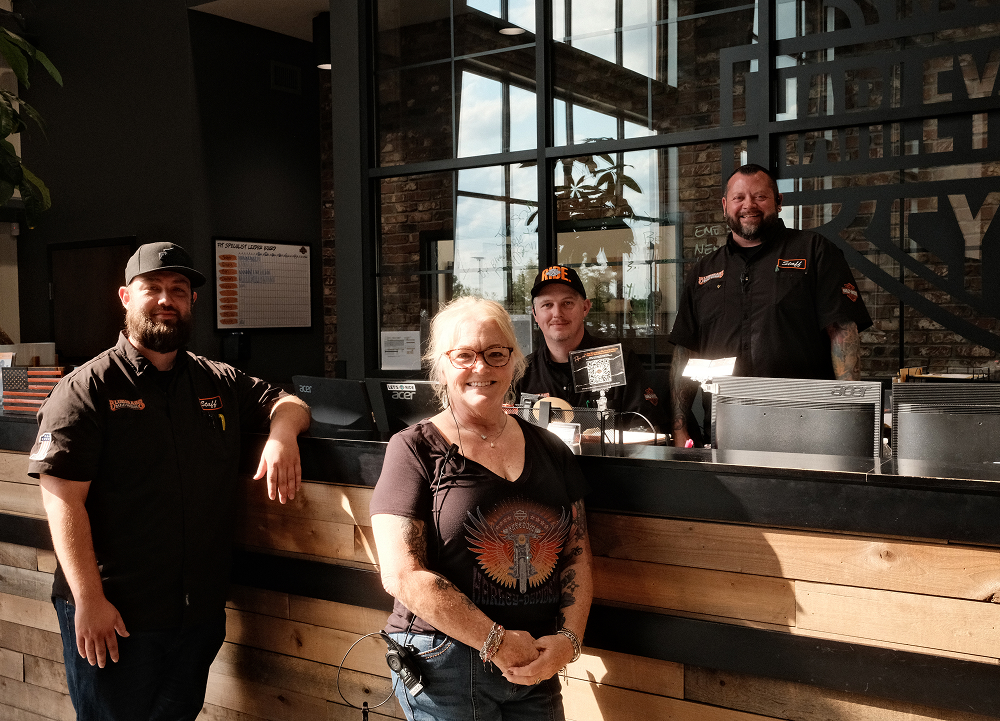
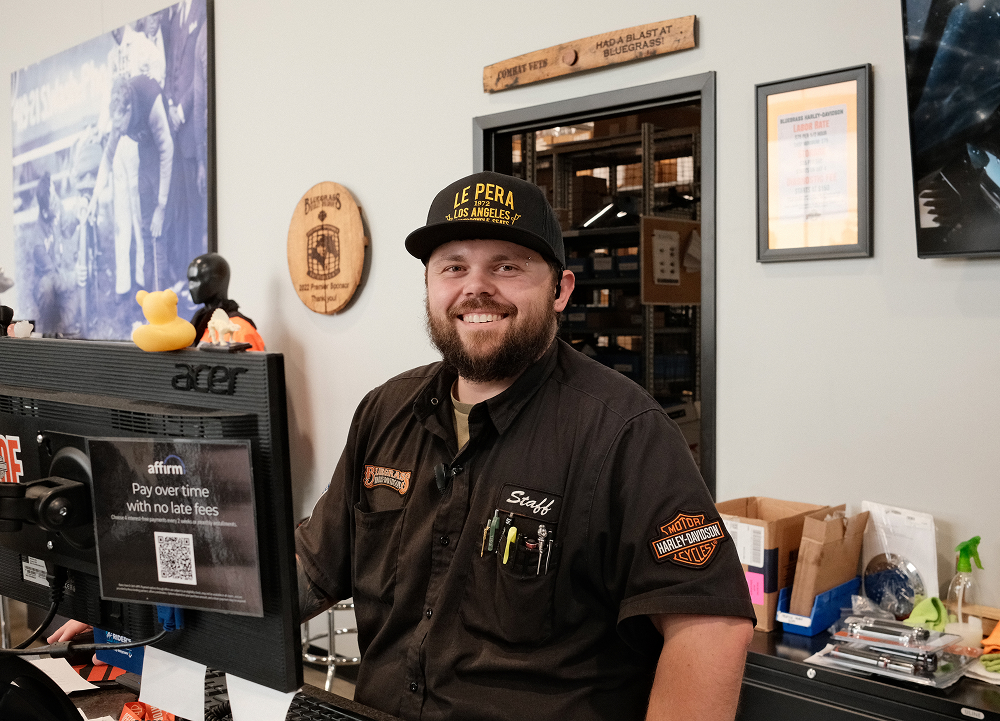
The lot outside is littered with burnout marks. Inside, conversations about Shovelheads and Panheads happen as naturally as discussions about the newest Touring models.
Community involvement is another priority. Jason told me much of the dealership's charitable work centers on kids, veterans, and cancer research. Bluegrass also participates in Bikes or Bust, a charitable initiative with a local radio station that brings donated bikes to children.
The dealership hosts rides and events throughout the year, including activities through its Harley Owners Group chapter, and Jason said they want Bluegrass to be a place where people feel welcome whether they're shopping for a motorcycle or simply stopping in.
"If you live around here," he said, "we want you coming and hanging out."
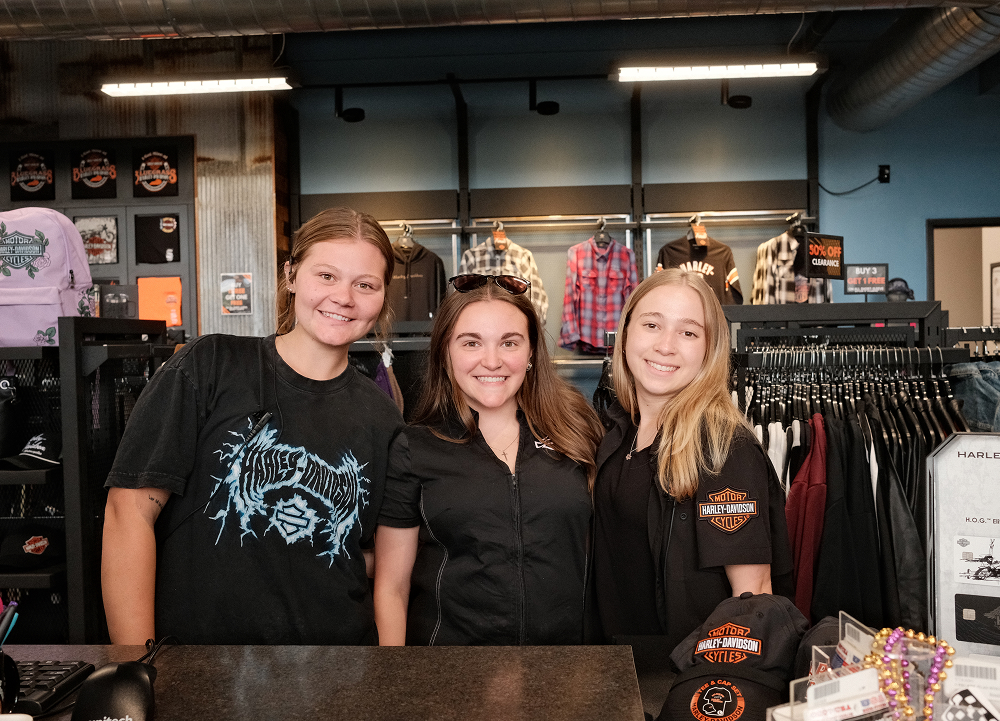
That same philosophy carries over into how Bluegrass introduces new customers to the dealership.
During the buying process, every purchaser goes through what the staff calls the Customer Poker Run. Instead of signing paperwork and heading straight for the parking lot, customers visit multiple departments before taking delivery of their motorcycle. They meet the people in Parts, MotorClothes, and Service, turning what could be a simple transaction into an introduction to the dealership they'll continue visiting long after the sale.
The result is that customers leave knowing the people they'll likely see again, even after delivery day. It's an introduction to the dealership itself, not just the motorcycle.
And the service department is an impressive animal of its own.
Bluegrass has eight technicians, three of whom are Master Technicians, and Jason told me one of the things he's proudest of isn't a certification or an award. It's the way experienced technicians invest in the next generation.
"The coolest thing about our shop is we have some young up-and-coming guys and the older guys are always ready to help them," he said.
BLUEGRASS HAS EIGHT TECHNICIANS, THREE OF WHOM ARE MASTER TECHNICIANS, AND JASON TOLD ME ONE OF THE THINGS HE’S PROUDEST OF IS THE WAY EXPERIENCED TECHNICIANS INVEST IN THE NEXT GENERATION.
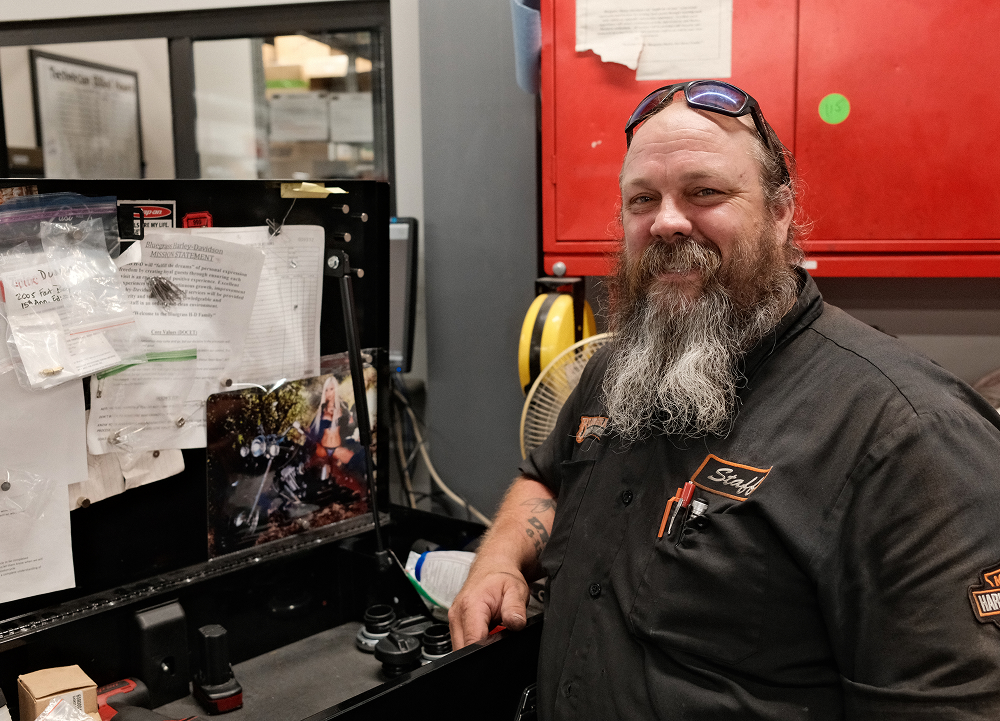
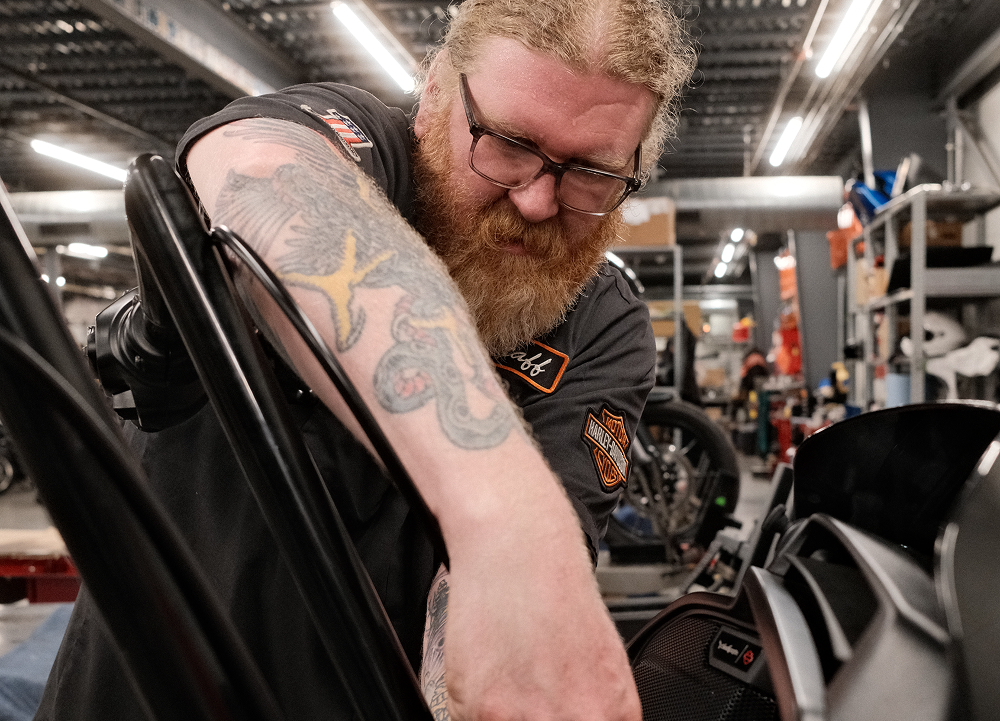
Harley-Davidson technicians aren't built overnight. They learn through experience, repetition, and the willingness of someone who's been doing it for years to share what they know. Bluegrass seems to understand that if you want great technicians tomorrow, you have to give young ones a chance today.
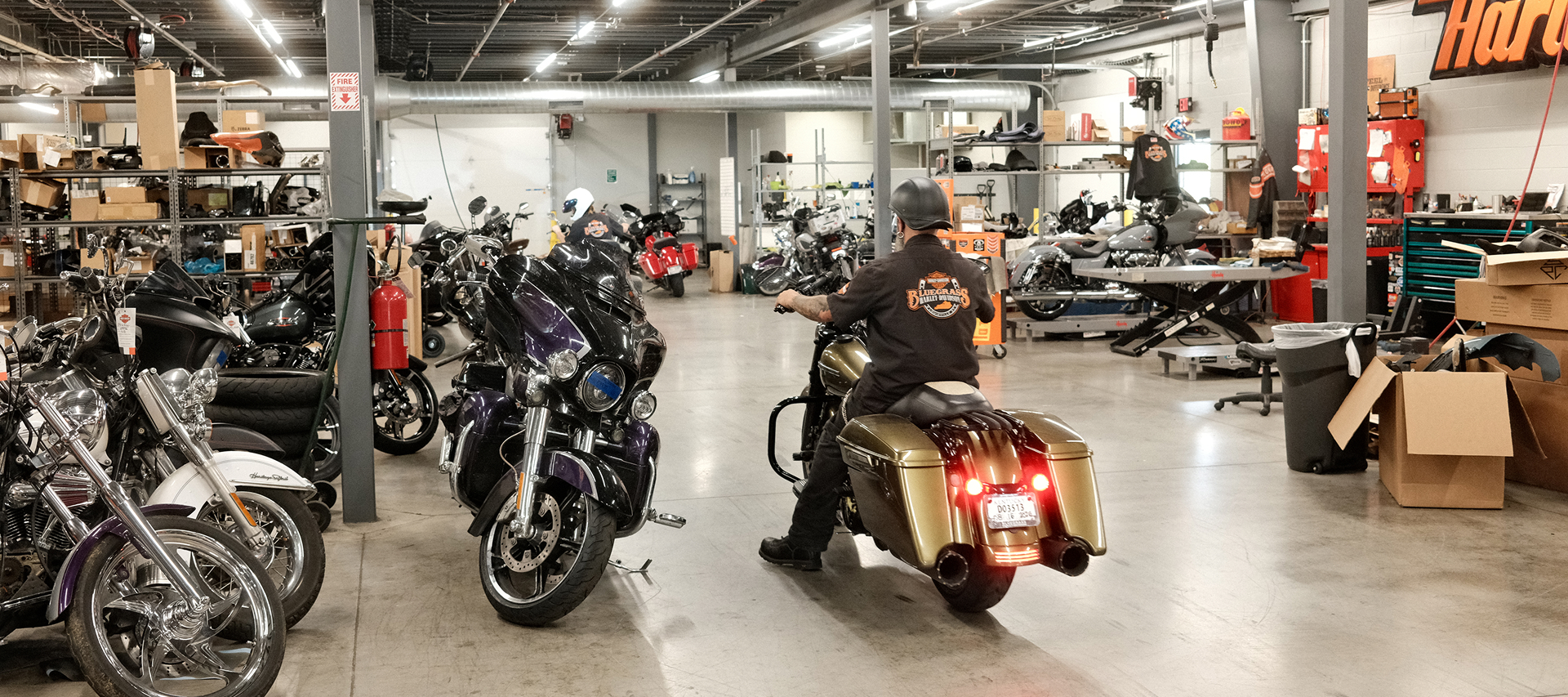
The service department also approaches scheduling differently than many dealerships.
"We don't schedule service here," Jason explained. "We have people bring their bikes in and we do them. We move fast, and it takes a lot of the back and forth out of getting your bike looked at, repaired, and serviced.”
That flexibility reflects the team's confidence in its workflow and capacity. Plus, the institutional experience definitely doesn’t hurt.
Jason pointed out that many members of his leadership team have spent more than a decade at Bluegrass. His sales manager has been with the dealership for eleven years. Service Manager Andy has been there since the beginning, now entering his twelfth year.
"Our whole core group has been here a while," Jason said.
Longevity matters, and everyone here gets it.
Walking through the dealership, I noticed plenty of modern amenities and carefully planned displays, but I also noticed a ton of smaller, less polished things. The way employees joked and horsed around with each other, the way they knew their customers by name, the way they’d all intermittently drift around and talk to each other. Service people hangin’ out in sales, Sales people stopping by MotorClothes, etc.
For all the thought that went into designing the building, the culture feels extremely organic, and it creates a space where people want to be a part of it all — customers and employees alike.
Bluegrass Harley-Davidson's history stretches back more than 40 years, and while the current building represents a new chapter, the dealership continues to build around ideas that don't really change with time.
Namely: Motorcycles bring people together. Communities matter. Relationships outlast transactions.
BLUEGRASS HARLEY-DAVIDSON'S HISTORY STRETCHES BACK MORE THAN 40 YEARS, AND WHILE THE CURRENT BUILDING REPRESENTS A NEW CHAPTER, THE DEALERSHIP CONTINUES TO BUILD AROUND IDEAS THAT DON’T REALLY CHANGE WITH TIME.
Those ideas have guided the Schipper family's growth as they've expanded into multiple Harley-Davidson markets across the Midwest, but Jason was quick to point out something that distinguishes their organization from many larger dealer groups.
"As far as being part of a group goes, inventory is a huge benefit to leverage," he said. "We always have the bike you want."
Then he paused.
"What really makes us different from big auto groups is that the business here is a product of our passion. Their passion is business."
It took me a minute to wrap my head around, but after spending a few hours hanging out with these folks, I understood exactly what he meant.
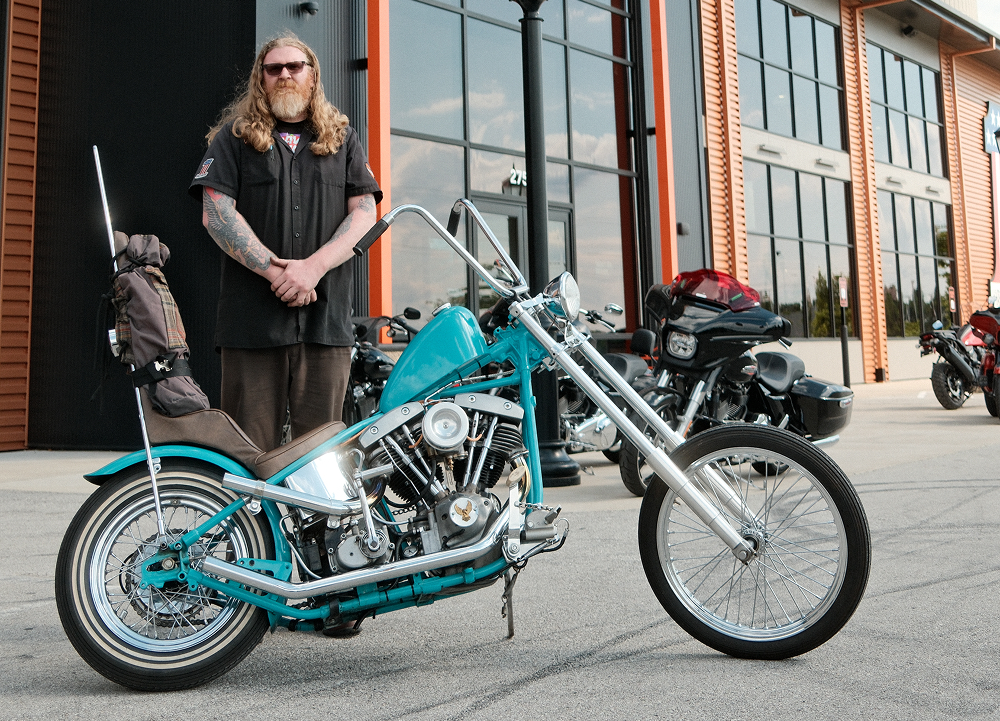
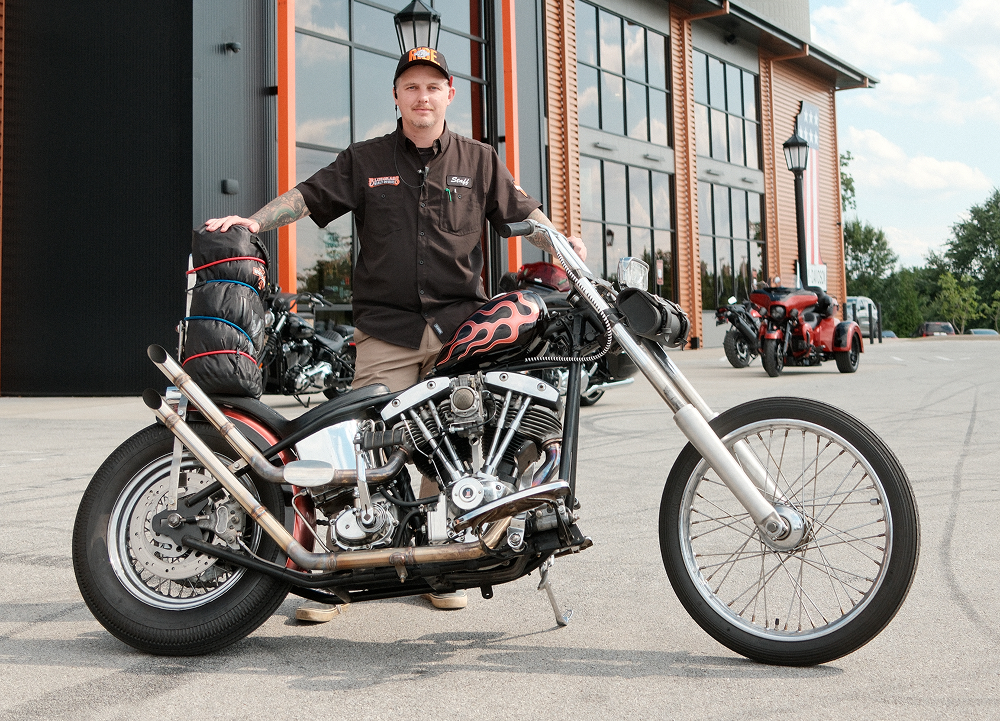
The building itself may resemble the kind of polished retail environment you'd expect from a large modern dealership. But the people don't. They're riders first.
Bluegrass Harley-Davidson sits at 2755 Terra Crossing Boulevard in Louisville, and from the parking lot you may think you've already figured the place out.
You haven't.
Stop inside. Look around. Talk motorcycles with the staff. If you need a new bike, parts, service, MotorClothes, or information about upcoming events, call (502) 244-4200. The building will make the first impression. The people are what you'll remember.
BLUEGRASS
HARLEY-DAVIDSON2755 Terra Crossing Boulevard, Louisville, KY 40245
FIND A HARLEY-DAVIDSON DEALER NEAR ME
EXPLORE MORE FROM THE NETWORK
MAN O' WAR HARLEY-DAVIDSON: BET ON THIS HORSE
A visit to Man O’ War Harley-Davidson reveals a dealership where Kentucky heritage, family values, and rider community come together.
OCEAN STATE HARLEY-DAVIDSON: THE STORIES WE KEEP
Inside an old New England mill, Ocean State H-D carries forward decades of craft, community, and the stories riders return to.
PRECISION HARLEY-DAVIDSON: NOT HELPING ISN'T IN THE EQUATION
Precision Harley-Davidson blends old-school dealership soul with real machine work and a deep commitment to keeping H-D iron — old and new — alive and on the road.
BUMPUS HARLEY-DAVIDSON OF MURFREESBORO: THE LONG WAY UP
Bumpus Harley-Davidson of Murfreesboro demonstrates how a dealership built on experience, care, and genuine hospitality creates something far bigger than a place to buy motorcycles.
KEGEL HARLEY-DAVIDSON: A DAY INSIDE THE WORLD’S OLDEST FAMILY-OWNED DEALERSHIP
Kegel Harley-Davidson stands as a living testament to family legacy and American motorcycling history, thriving for more than a century just south of Milwaukee’s birthplace of the brand.
HARLEY-DAVIDSON OF MADISON: THE DEALER WHO CARES
With a Knucklehead in the window and decades of dealer history, this visit to Harley-Davidson of Madison explores a family-run dealership defined by legacy and spirit.
WOODSTOCK HARLEY-DAVIDSON: WHERE NEW RIDERS ARE BORN
A ride through the Catskills leads to Woodstock Harley-Davidson, where deep history, passionate people, and a thriving new Riding Academy embody the dealership’s enduring community spirit.
HARLEY-DAVIDSON OF NASSAU COUNTY: OLD SOUL, NEW SPIRIT
A chilly October ride to Harley-Davidson of Nassau County becomes a warm, nostalgic look at a family-run dealership rooted in New York history, community, and lifelong passion for motorcycles.
BERGEN COUNTY H-D: PROUDLY MADE IN JERSEY
A little louder, a little prouder, and a lot more loyal than most. Bergen County Harley-Davidson has been holding down North Jersey’s corner of the Harley world for 50 years, and we stopped by to pay respects.
CLASSIC HARLEY-DAVIDSON: KEEPING HARLEY CULTURE REAL IN RURAL PA
In Leesport, Pennsylvania, Classic Harley-Davidson proves that real Harley culture is rooted in family, community, and sharing the open road with all-comers.
BLACK HILLS HARLEY-DAVIDSON: THE ROAD GOES ON FOREVER, AND THE RALLY NEVER ENDS
When the Black Hills come alive every August with the roar of the Sturgis Motorcycle Rally, no place embodies the madness, magic, and meaning of it all quite like Black Hills Harley-Davidson.
STURGIS HARLEY-DAVIDSON: MAKING HISTORY IN THE HEART OF RIDER CITY
Sturgis has always been the epicenter of motorcycle culture. Now, for the first time, you can buy your Harley right in the middle of it. Welcome to Sturgis Harley-Davidson.
BARTELS’ HARLEY-DAVIDSON: A DIFFERENT BREED OF DEALERSHIP
If you’ve ever wondered what it’s like to walk into a shop where the name on the sign is also the person handing you your keys, this is it.
LAIDLAW’S HARLEY-DAVIDSON: THREE GENERATIONS DEEP, AND STILL RIPPING
Before this place became one of the most respected Harley-Davidson dealerships in the country, it was just a small shop on Garvey Avenue in Rosemead.
QUAID HARLEY-DAVIDSON: ON THE BUSINESS OF GOING FAST AND EATING TACOS
This is a dealership run by people who love the brand, the bikes, and the world that comes with them.
RED ROCK HARLEY-DAVIDSON: FINDING THE HEART OF THE RIDE IN THE CITY OF SIN
Red Rock Harley-Davidson is the kind of place that reminds you why you started riding in the first place.
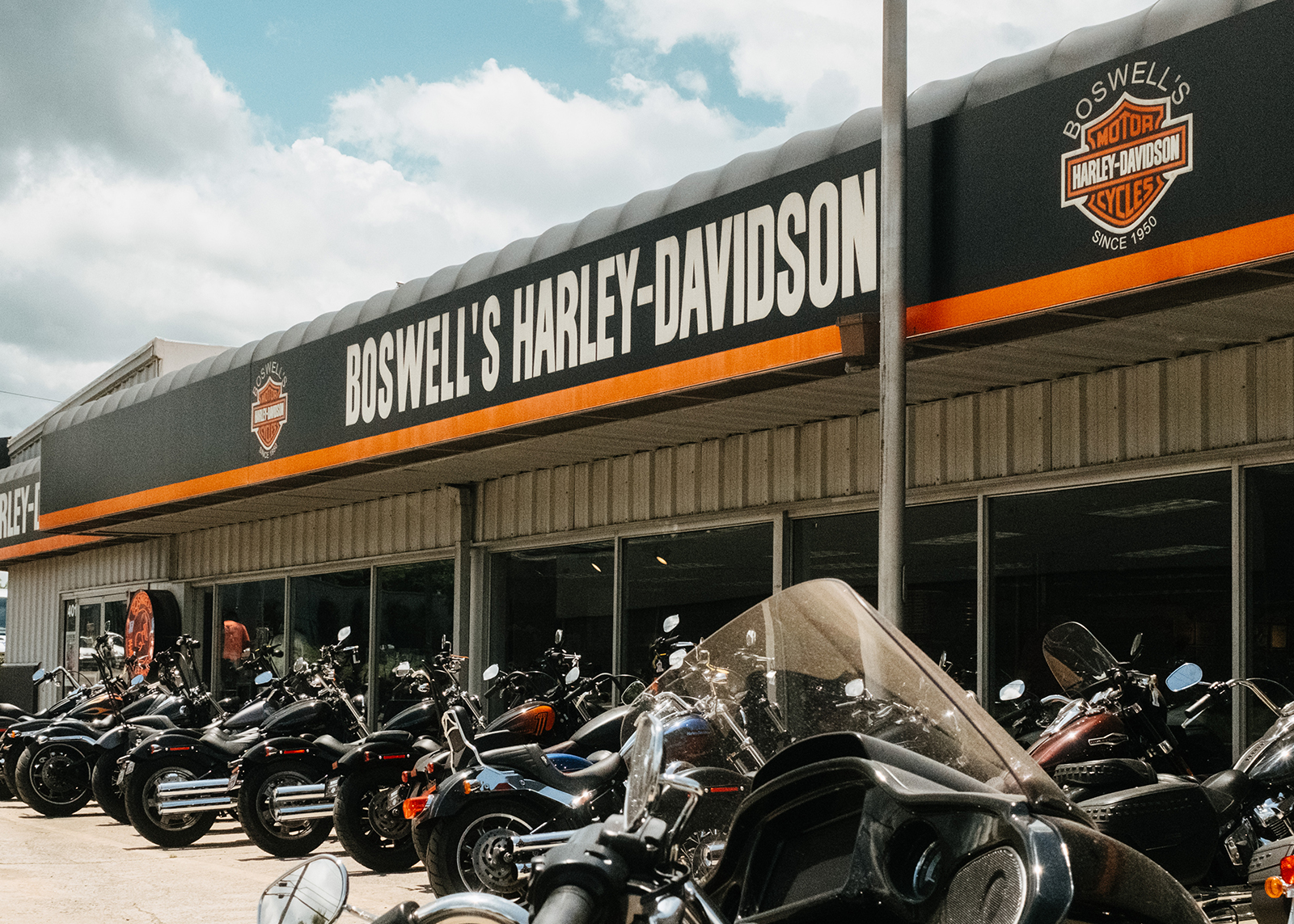
BOSWELL’S HARLEY-DAVIDSON: 75 YEARS IN THE SADDLE
The air smells like tires and burger grease. The techs still know your name. When you leave, you’re sent off with a handshake and a promise to see you at the next ride.
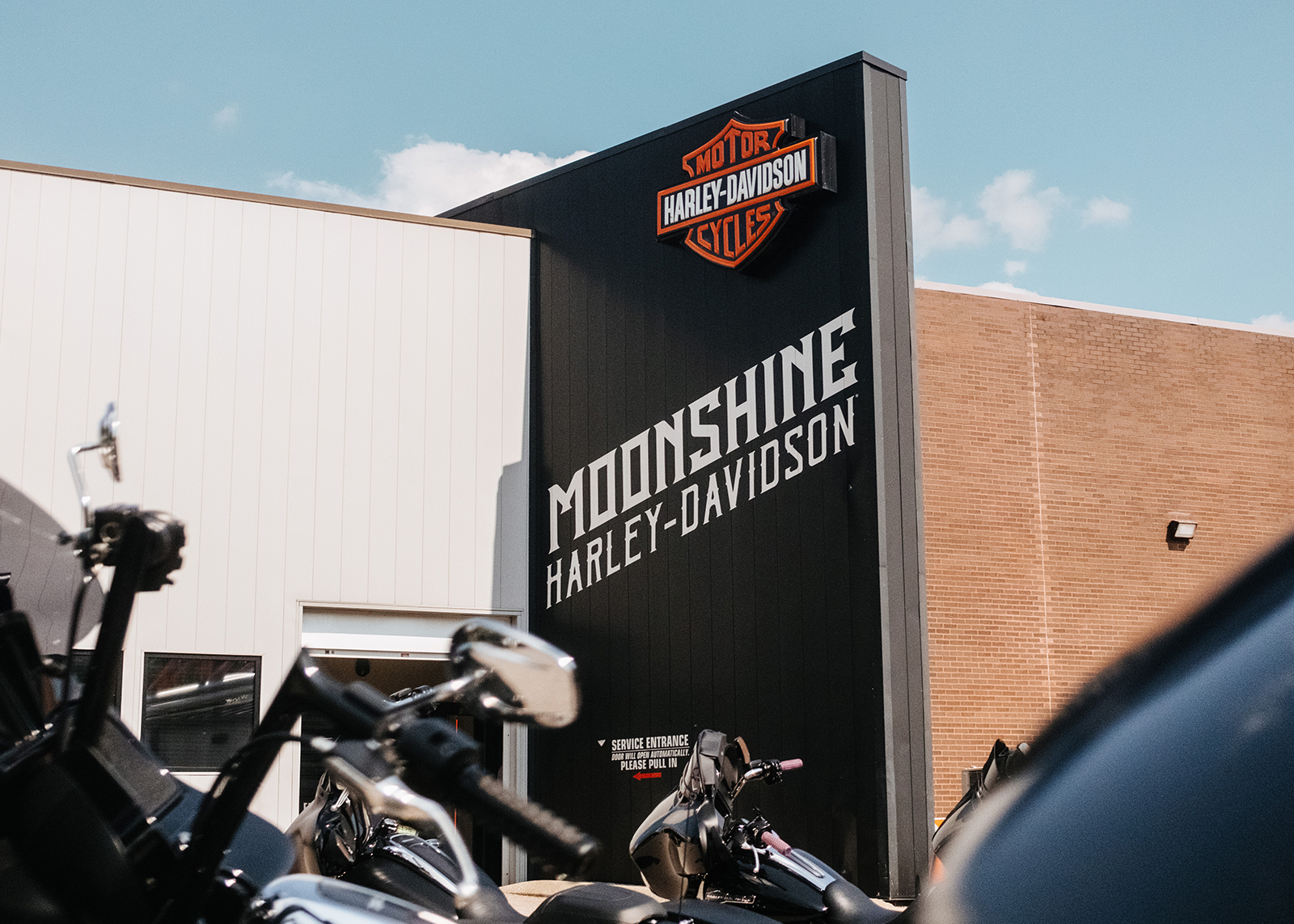
MOONSHINE HARLEY-DAVIDSON: HARLEY-DAVIDSON’S PERFORMANCE KINGS
Their vision for what Harley performance can be is so far ahead of the curve that it feels like you’re watching the next chapter of the industry being written in real time.
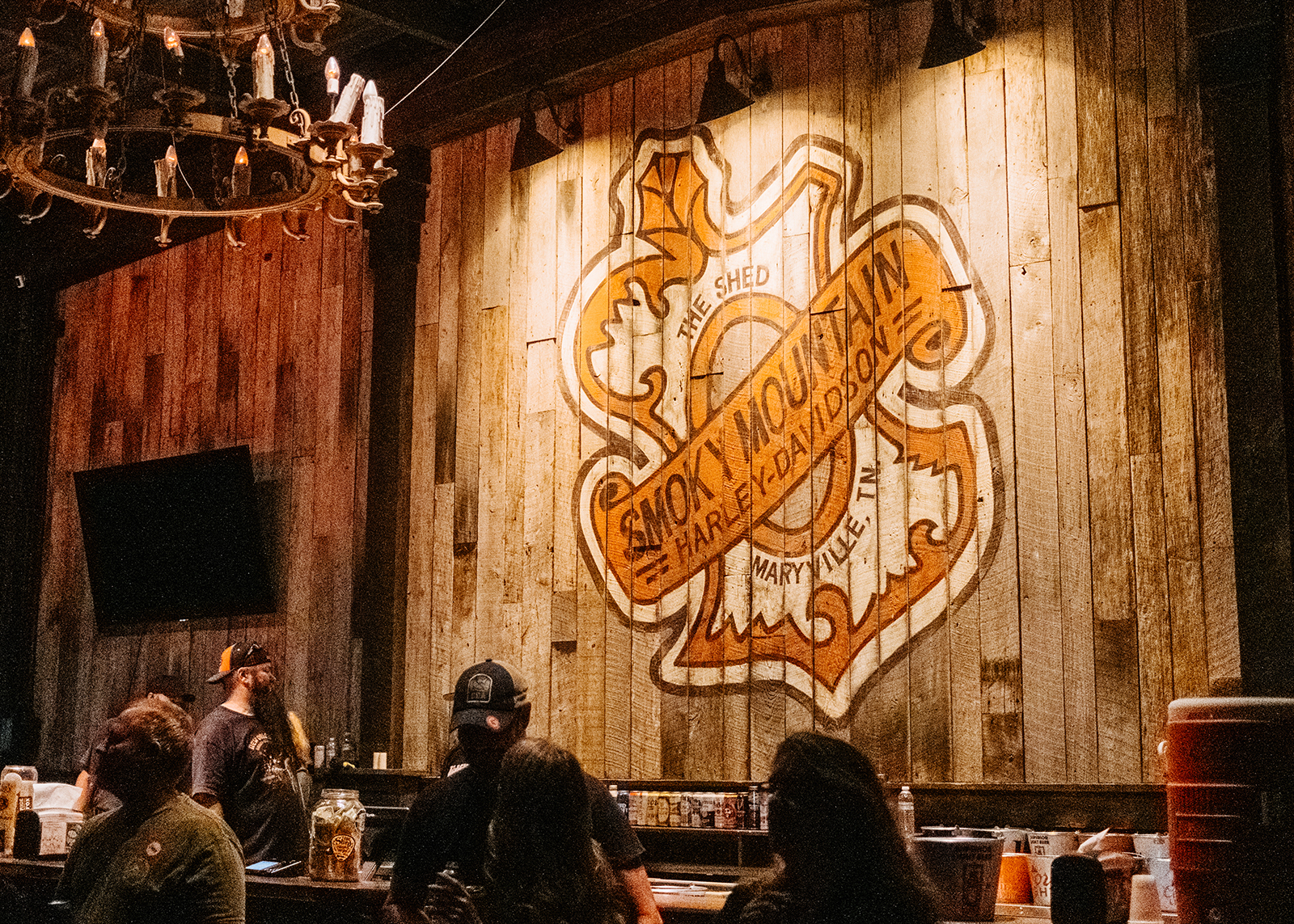
SMOKY MOUNTAIN HARLEY-DAVIDSON: NO ORDINARY SATURDAY
Smoky Mountain is a cornerstone. That blend of old and new — vintage bikes and choppers on display, modern bikes rolling off the floor — tells a story without needing to spell anything out.
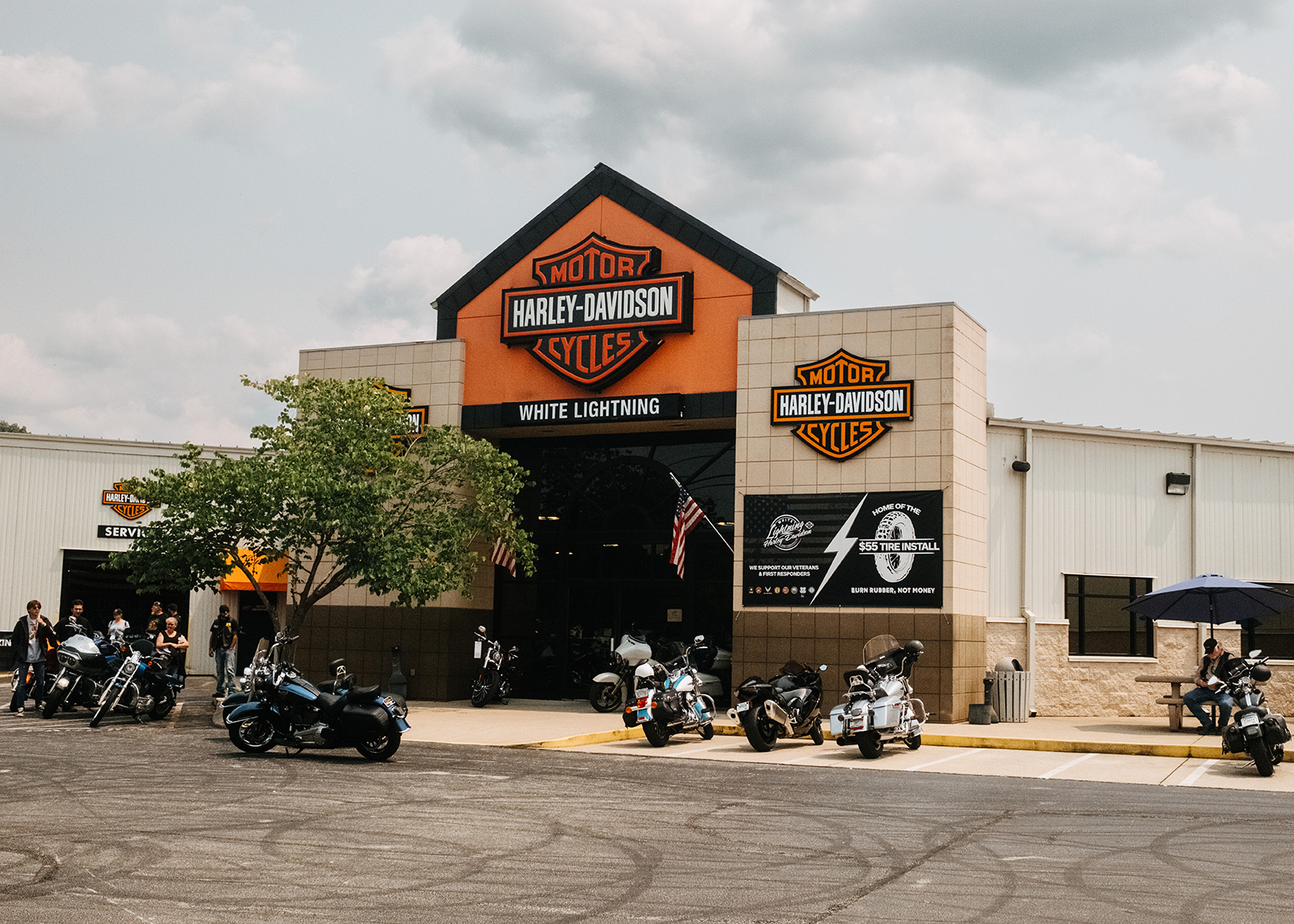
WHITE LIGHTNING HARLEY-DAVIDSON: WHERE THE TRAIL BEGINS
The Pan America program at White Lightning is on another level. This place lives and breathes the platform.